
Opinion
A first rate knowledge economy needs a first rate access model
With an ageing society, the Netherlands faces a growing challenge: how to keep healthcare sustainable and future-proof. With a thriving life sciences and biotech sector, we have the right cards in hand to solve these major challenges for the future. Whether the Netherlands turns this advantage into long-term progress was the central theme in a BiotechNews interview with Andrew Plank, General Manager of Roche Netherlands held on stage during Innovation for Health 2026.
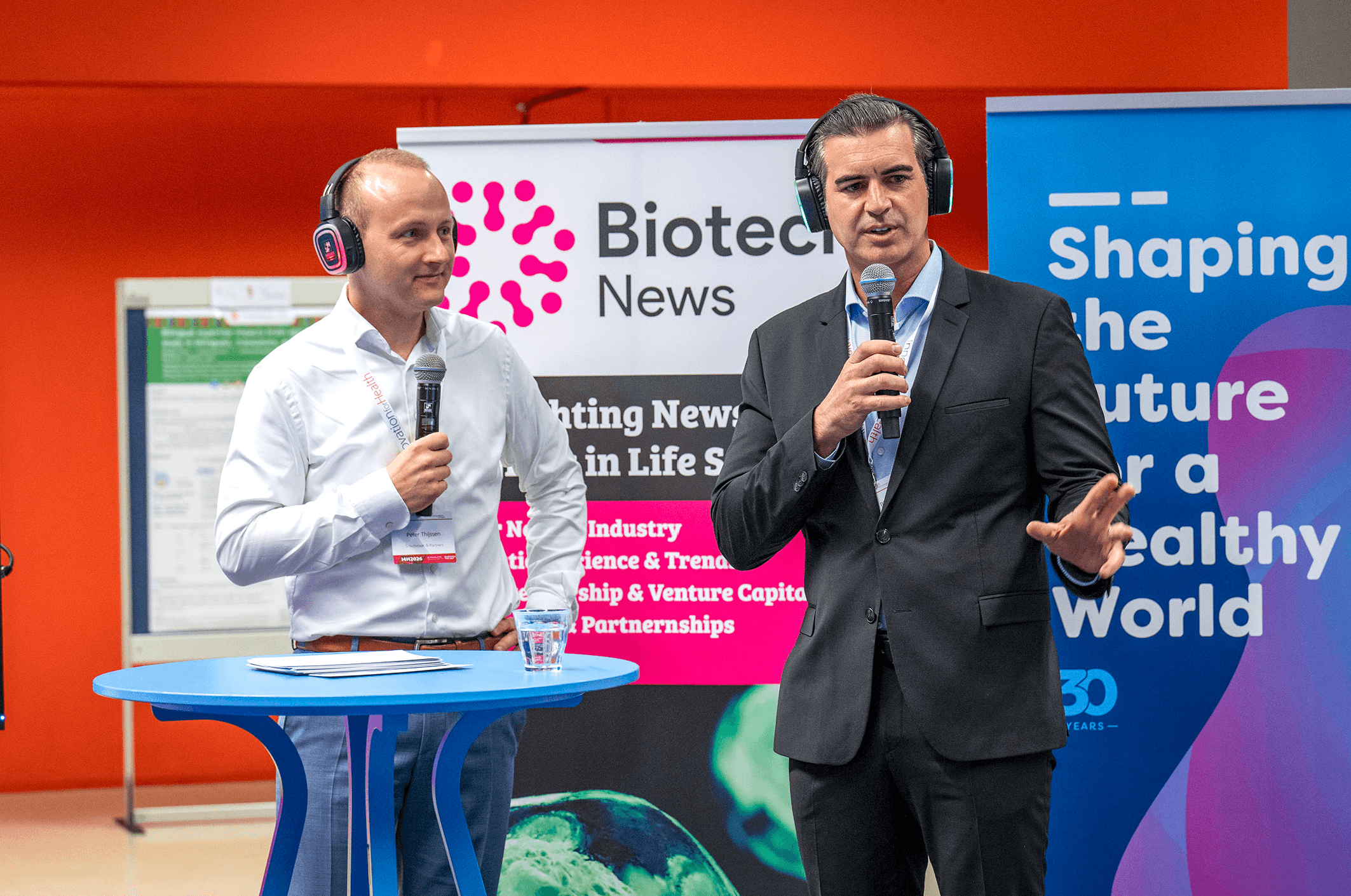
Plank, who brings more than 25 years of international experience from Canada, Switzerland and the United States, offers a clear analysis of where the Netherlands stands today, where it risks falling behind, and how it can seize the opportunity to strengthen its position.
A strong foundation, but not yet fully leveraged
Plank emphasizes that the Netherlands has much to be proud of. A major 2025 international benchmark ranked the Dutch life sciences and biotech sector sixth out of 32 countries. Few nations combine academic excellence, scientific talent and logistical strength as effectively as the Netherlands. But this strong starting point also comes with a strategic question: What will the Netherlands do with this advantage?
“The country has everything needed to be an innovation leader,” Plank notes. “The real question is which choices we are prepared to make, especially now that we have a major healthcare burden to solve.”
View healthcare as an investment, not a cost
Across the world, health systems struggle to stay resilient as populations age and live longer. In these discussions, Plank sees a recurring and misleading assumption: that innovation is too expensive. In reality, he argues, not investing is what ultimately drives up costs.
“You cannot save your way to prosperity,” he said. “If we continue to focus on cost, we'll hit short-term budgets, but we'll trade off long-term economical and societal value.”
Seeing healthcare as a strategic investment rather than a financial burden changes the conversation. Healthier citizens participate more in society, contribute to the economy, and strengthen national resilience and autonomy. This requires courage and long‑term thinking, but doing nothing, Plank stresses, is far riskier.
A market access model unfit for a knowledge leader
For Plank this discussion can be summarized in a single statement: a first‑rate knowledge economy cannot function with a second‑rate access system for new medicines. He argues that innovative treatments are too often viewed solely through a cost lens rather than a value lens. Access procedures are strict, unpredictable and slow, hindering not only patient access but also the attractiveness of the Netherlands as a location for innovation.
This also affects clinical trials. “Clinical trials are a clear barometer for innovation,” says Plank. He points to global trends: Europe’s share of worldwide clinical trials fell from 22% to 12% between 2013 and 2022, while China doubled its share. “If a country is no longer attracting clinical trials, it cannot claim to be an innovation leader. And in the end, it’s patients who feel that loss most.”
Other European countries are showing the way forward. Systems that allow early access immediately after EMA approval, followed by real‑world evaluation and later negotiation, enable faster care, shared risk and greater physician trust. “We should trust physicians, they know what is best for their patients,” Plank emphasizes.
Trust and collaboration: the ecosystem’s missing pieces
Throughout the conversation, Plank returns to one theme also central in the Wennink report: effective innovation requires a collaborative ecosystem based on trust. It requires deeper cooperation between government, insurers, hospitals, regulators, academia and industry, not through fragmented discussions, but by bringing everyone into the same room and keeping them there until solutions emerge.
“When parties meet face‑to‑face, the common ground is usually far larger than the differences. Trust grows quickly once you talk about solutions rather than positions.”
For its part, Roche aims to contribute by ensuring reliable medicine supply, investing in clinical research, and participating in public–private partnerships that strengthen the Dutch innovation landscape. Because the time to act is now.
The Netherlands has the strengths to lead in life sciences, but leadership requires action. Only a first‑rate access model can support a first‑rate knowledge economy. And only then can innovation truly fulfil its purpose: delivering faster, better and more equitable care to every patient.