
Career
European Medicines Agency: build a career with impact, purpose and growth
6 min read
What becomes possible when organisations stop suppressing neurodiversity? According to Geertruyt Stokes of AllMindsThrive, the answer is simple: better science, better collaboration, and better systems. In this conversation with BiotechNews, Stokes reflects on why neurodiversity should not be viewed as an accommodation issue, but as a strategic advantage — especially in research-intensive sectors where deep focus, unconventional thinking, and pattern recognition are essential for innovation.
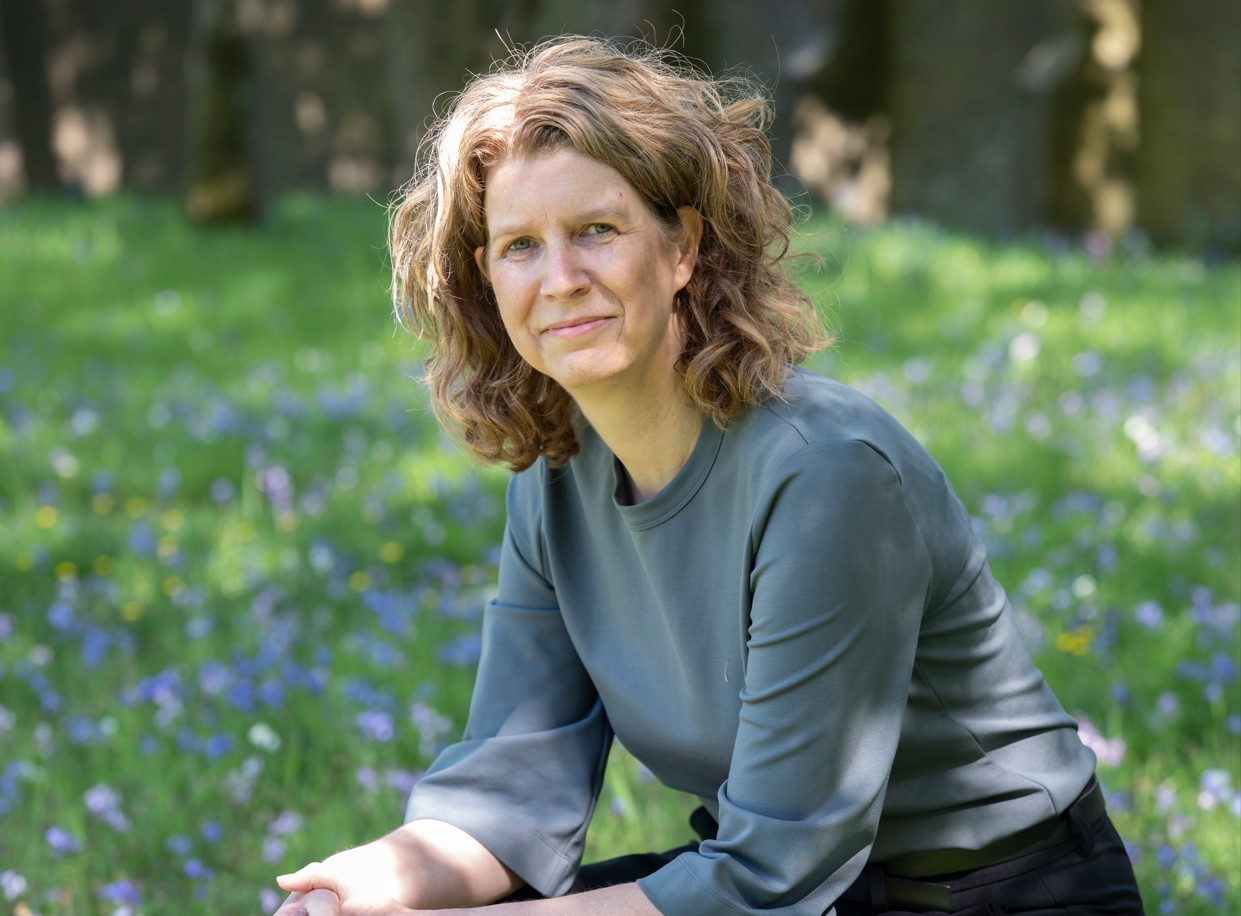
For many people, neurodiversity is a professional interest. For me, it was just home.
I grew up in a neurodiverse family. Back then, we didn't have language for it. It was simply our normal. Looking back, those early experiences shaped everything about how I understand the way different minds work. I just didn't know it yet.
The professional turning point came when preparing workshops for two technical teams in the energy sector. It became clear that several team members were on or close to the autism spectrum. Rather than just "accommodating" them, the goal was to genuinely design for how they actually work. So: call my niece who's on the spectrum herself, and ask her directly. Her advice was precise: clear agendas, no surprise pivots, small stable groups, no pressure to socialize after hours. Simple. The whole team responded the same way: "This actually works better for me too."
That's the moment everything crystallized. Designing for different brains doesn't create exceptions. It creates better systems.
So what does that actually look like day to day?
Smaller than people expect. Agendas sent in advance. Meetings that end when they're supposed to. Written input taken as seriously as verbal. Quiet spaces that aren't seen as a sign of disengagement.
For teams working on complex, long-cycle problems, and in life sciences, I guess that that's most of them, these aren't perks. They're the conditions that deep work requires.
Here's what we keep coming back to: one in five people is neurodivergent. In research-intensive environments, where people have often been drawn to science precisely because it rewards deep, unconventional thinking, that number may well be higher. Neurodiversity isn't rare. It's the norm of human variation. The real question is what organizations leave on the table by designing everything around a narrow neurotypical standard.
Where do well-intentioned teams still get it wrong?
The most common pattern: leaders focus on accommodation rather than contribution. They ask "how do we help this person fit in?" But the better question is: how do we design the work so this person brings their absolute best? Those lead to completely different organizations.
You hire someone for their pattern recognition, their hyperfocus, their capacity to hold ten variables at once and find the thread. Then you put them in an open-plan office with back-to-back meetings and last-minute agenda changes. And wonder why they're underperforming.
It's never malicious. The default template was built for one kind of brain and then left unchallenged.
One thing we keep seeing: when people feel different, they apologize for it. During a recent Neurodiversity for Managers training, we heard "sorry" all day long. Sorry for being too fast. Too precise. Too focused. Too direct. We finally paused and asked: what if, for the rest of today, no one said sorry for who they are? The room shifted immediately. Shoulders dropped. Something released.
Do neurodivergent people walk through professional life constantly apologizing for how their brains work? Too often, yes.
What's the biggest misconception leaders bring to this topic?
That it’s unfair to give people different treatment. This comes from the worldview that all people need to be treated equal. Fair enough. But you do allow someone to wear glasses, that’s accepted. So why not allow someone to use noise cancelling head phones? To just give an example.
Often leaders hope that we will give them a manual. They come to our trainings genuinely looking for one. They want certainty in an area that resists categorization. When you know one person with ADHD, you know one person with ADHD. Labels help us start conversations but they also trap us in assumptions. And really, each person has its own unique brain wiring.
Good leadership here isn't memorizing definitions. It's learning to ask the person in front of you: what works for you, and what gets in the way? Direct, human conversations. That's it.
And another big one: thinking this belongs in HR rather than strategy. In life sciences, where innovation depends on precision and the ability to see what others miss, the business case for neuroinclusion is obvious. Deep focus, pattern recognition, hypersensitivity to detail, unconventional problem-solving. These aren't accommodations. They're the traits you're already hiring for. Then make space for it!
Being "neuro-friendly" and being neuroinclusive are not the same thing. One tolerates difference. The other is designed around it.
Why does change feel so hard to actually make?
Three things, every time.
First: inclusion gets treated as a communication problem, not a design problem. But you can't talk your way into it. Neuroinclusion has to be built into how decisions are made, how feedback is given, how careers develop. In an industry that redesigns processes when they produce biased outcomes — in manufacturing, in clinical protocols, in quality systems — this logic should land. Same principle applies to how you run a meeting. If you want to start somewhere, start with making your meeting neuroinclusive.
Second: leaders skip their own inner work. Before you can create an inclusive environment for others, you need to examine your own assumptions. Do you believe that everyone brings talent and good intent? People are not there to disrupt, they want to contribute. Also, in our trainings, it's not uncommon for a senior leader to go quiet midway through and say, almost to themselves: "Wait. Am I neurodivergent?" That moment is often where the real shift begins.
Third: inclusion stays conceptual because it sits outside strategy. The shift happens when leaders connect it directly to what they actually care about, like pipeline productivity, scientific quality, talent retention in a market where the best people have real choices. It’s too often treated as a nice to have instead of a need to have.
Inclusion is not for the lazy. It asks leaders to genuinely change their thinking, habits, and assumptions. That's hard. But the alternative of leaving significant cognitive potential untapped is harder.
Ten years from now, what does this look and feel like?
You walk in and the environment signals something different before anyone says a word. You see zones for different sensory needs. Or quiet spaces used by the focused, not the struggling. Project timelines are displayed visually rather than buried in dense documentation. Meetings that start and end when they're supposed to.
You sit in on a leadership meeting. The CEO is pacing while thinking through a problem and no one notices, because that's just been normal for years. The COO is drilling into a detail the rest of the table has moved past and the team waits, because they know that's where the risk lives.
No one's energy is being spent on trying to fit in and be “normal”, whatever normal means in your context. That energy goes into the science instead.
And the science is better for it.
The organizations that will have gotten this right in ten years won't be the ones with the most neuroinclusion programs on record. They'll be the ones that stopped asking "How do we manage neurodiversity?" and started asking "What becomes possible when we stop suppressing it?"
In an industry that runs on breakthrough thinking, that may be the most important question on the table.


