Career
Employeneurship: TMC's Model for building lasting careers in Life Sciences
5 min read
No two days of my PhD have been the same. One day, I am troubleshooting why a perfectly good assay suddenly won’t repeat; the next I am trying to understand the data that is telling me something I did not expect. I love that unpredictability, and I am good at working within it. Somewhere in the process, another thought started to arise. Academia had shown me how discoveries begin: with curiosity, patience, and careful work at the bench. But I started to wonder about the bigger picture beyond the lab: how a promising discovery leaves the lab and eventually reaches patients.

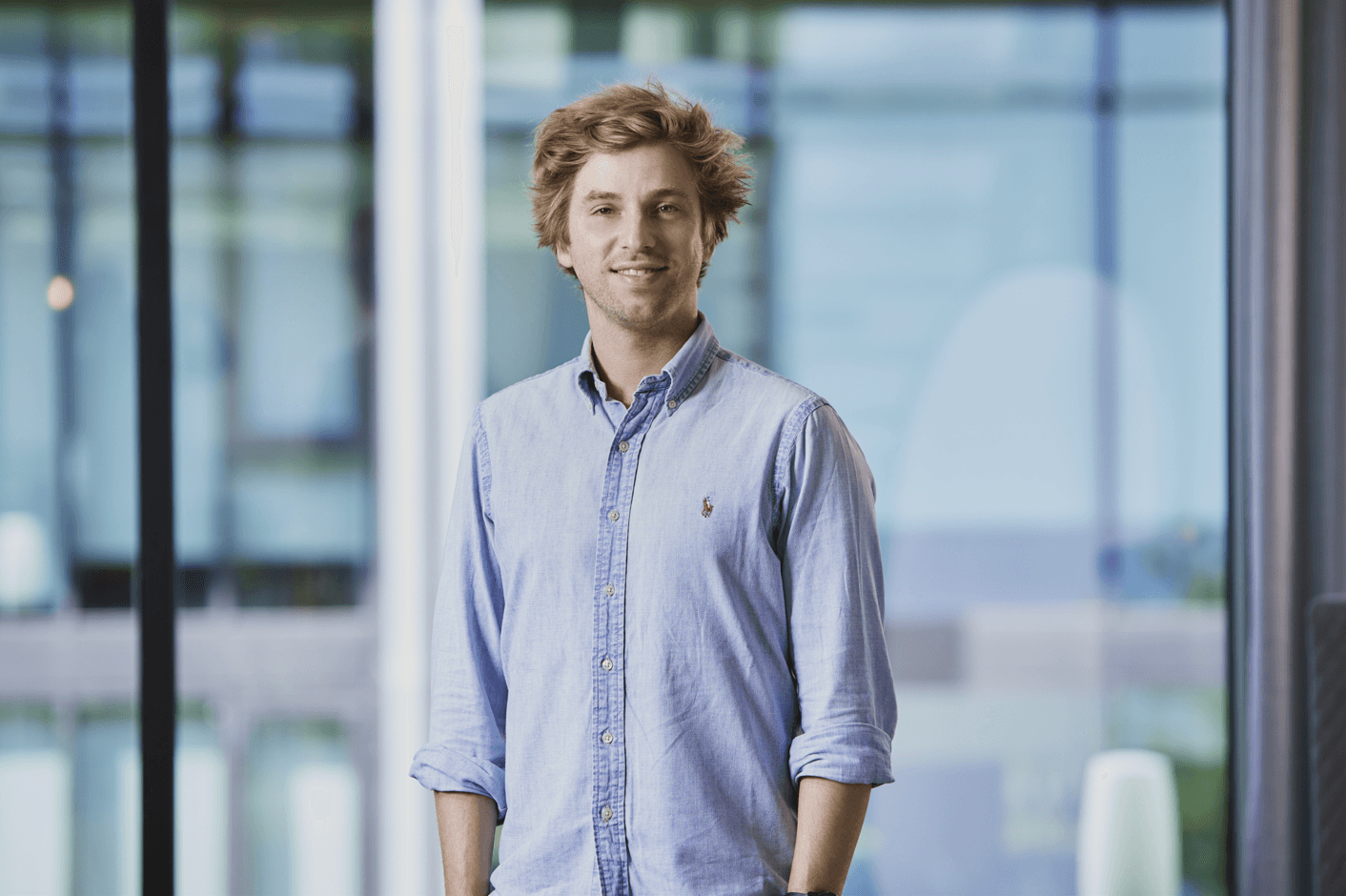
Jayashree Jayachandran Photo by:
By Jayashree Jayachandran
At first, I thought that meant leaving science. Five days at the BioBusiness Summer School changed my perception. I realized that you can step away from the lab without stepping away from science. You just begin to approach it from a different angle: the business, the development, and everything that turns a promising project into a product.
The BioBusiness Summer School 2026 gave me a clearer view. It showed me the parts I had never seen clearly before: how a biotech is financed, how biotech and pharma think at different stages, and how one discovery can become many things: a patent, a license, an option, an acquisition, or a partnership. It also covered topics that helped us translate our academic strengths into tangible industry value.
None of this was presented as easy, or as something one person does alone. One of the most honest messages of the week was that biotech is high-risk, expensive, and slow. Carrying a discovery forward depends on coordinated teams, shared knowledge, and trust. No single person holds the whole process from end to end. Seeing the full path laid out helped me understand why the business of biotech is so much harder and longer than the science alone: every stage adds cost, risk, and more people who have to stay aligned for the work to move at all.
What struck me was how different the participants were, and how well the week catered to all of us. Some of us were lab scientists, comfortable with experiments and data but less familiar with the business side. Others already followed biotech and pharma closely, but had never seen the whole picture add up. A third group came with the clear intention of building companies, and spent the week learning up close from people who had already done it.
I came for the business mechanics, but I think I will remember the people most.
Meeting Jan van de Winkel, the CEO of Genmab, is one of those moments I keep telling people about. Before his talk, Jan arrived early to check the slides and video himself. I had maybe five minutes with him beforehand, but he welcomed me as though there was no rush at all – warm, easy to talk to, ready to answer anything.
Then the session started, and as he spoke, our minds did not wander. We did not want it to. You could feel the scientific passion, the curiosity, and the drive to do science that impacts patients directly. Somewhere in there, I found myself sitting with a question I had not expected: what is left to chase once you have already achieved so much? The way he carried himself was the answer: still curious, still kind, still talking about science as someone genuinely interested in it. I will not pretend I was not a little starstruck. But what stayed with me was the reminder that reaching the top does not have to cost you your generosity.
Another thing that stayed with me, and motivated me more than I expected, was how many of the people leading those rooms were women. As a woman in science myself, I found that it mattered to me more than I had realized. One CEO laid out the BioBusiness landscape with real clarity: risky and slow at times, but full of possibility if you know how to move through it. A lawyer made it clear that even a strong invention is worth little without the IP to protect it. An alliance manager spoke about the patience, trust, and communication it takes to hold complex partnerships together. Founders and scientific directors talked about building and running companies, sometimes after two PhDs, sometimes after changing direction, and often by making clear choices about the kind of work they wanted to do.
What impressed me was not just that they were in the room, but that they were running it: confident, sharp, and clearly very good at what they did. And yet they were not distant. Again and again, people ended their sessions by saying we could reach out on LinkedIn, ask follow-up questions, or even set up a call if we wanted to understand something better. That openness mattered. It made the whole world feel a little less closed, and a little more reachable.
Watching that up close, something became very clear to me: careers like this are not handed to you fully formed. You make decisions, take the opportunities that matter, build trust, and keep shaping the path toward the kind of work you want to do.
And it was not only the speakers. I had come from Germany, and my fellow attendees came from the Netherlands, the Czech Republic, and Luxembourg. It was an international room, and the kind of network that is hard to build on your own. The organizers were thoughtful and quick to answer every question, and hearing Haifen Hu, founder of Hyphen Projects, describe how a single career event had grown into an organization with so many arms was its own lesson in building something from scratch.
They had even prepared an overview of the Benelux life-sciences sector, mapping career paths across scientific, business, and commercial tracks alongside their prospects, pressures, benefits, the sort of overview that would take months to assemble yourself.
The week also moved across three locations: Amsterdam Science Park, Utrecht Science Park, and Leiden Bio Science Park. That mattered. It gave us a sense of the ecosystem not just on paper, but in place, with real exposure to the campuses, companies, spin-offs, and the different kinds of science being developed around each one.
I left the five days glad I had come: clearer professionally, and a little changed personally. I built a good network and connected with speakers and fellow attendees in ways I hope to keep.
The science I already loved is only the beginning of the story. The rest of it is where discoveries either become medicines or quietly disappear.
And I think that is where I want to be.


