Career
Employeneurship: TMC's Model for building lasting careers in Life Sciences
On the day of this interview, Biohub announced the Virtual Biology Initiative: a five-year, $500 million commitment to build the open data foundation for predictive models of cellular biology. The initiative brings together scientific institutes, technology companies such as NVIDIA, and non-profit funder Renaissance Philanthropy to generate biological data at unprecedented scale.

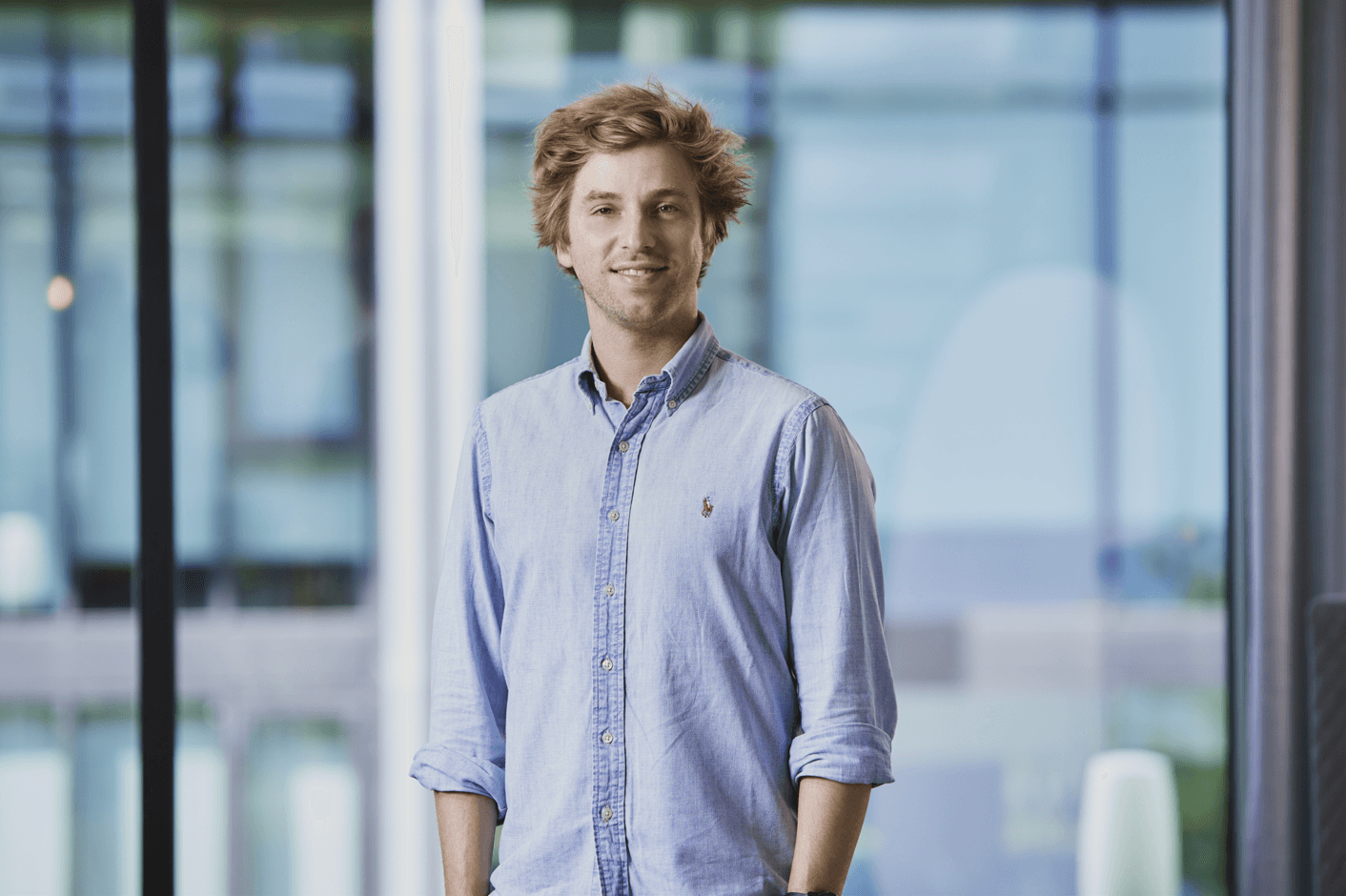
For BiotechNews and TOPX Network, TOPX member Vera Janssen interviewed Althea Stillman, Director of IP and Partnerships at Biohub in Silicon Valley.
Biohub is a non-profit research organization with the mission to cure and prevent all disease by the end of the century. It focuses on combining frontier AI with frontier biology to head in the new era of AIxBIO.
From genetics and neuroscience to tech transfer
“I’ve always been interested in the intersection of scientific breakthrough and its translation into human health,” Stillman says. After completing a PhD in genetics and a postdoc in neuroscience, she moved into tech transfer at the University of Pennsylvania. “That,” she says, “was the first time I understood that science is only one part of the picture. You also need IP, business development, and the ability to bring the right entities together to translate a nascent concept into something that can be advanced robustly toward the clinic.”
From there she joined an early-stage investment group focused on company origination out of academic institutions. “This added another layer: How to execute on vision, build investment theses, and translate lab-bench results to industry standards. Here I learnt how to align different organizations, and how to move different stakeholders to find the right deal structure,” she says.
As a self-described outgoing introvert, one piece of advice from her mentor during that time has stayed with her ever since: "You can leave a networking reception as soon as you've collected three business cards."
After working as an entrepreneur-in-residence at UC San Francisco and a biotech, she joined Biohub as Director of IP and Partnerships. “It felt as the next level: working across a large organization with multiple university partners.”
Her role has evolved significantly since joining. “I help manage the intellectual property (IP) portfolio of which the majority comes from our extramural research programs, where we hold joint IP with our university partners. I also manage internally generated IP,” she says. “Part of my work is maintaining invention disclosures and understanding how we translate that into a product. Patents are a tool to create a moat around a technology, and the question is how to use that to translate the work and maximize impact.”
The second major pillar of her role is part of the partnerships team, particularly in the context of Biohub’s new Virtual Biology Initiative. “The key question is how we partner with the external ecosystem around data generation. This is a huge next step for the field and not a one-entity task — we need a full community around it to reach the next level of potential.”
Aligning academia, tech, start-ups and capital
“We’re in a frontier moment right now, where many of the old rules are being discarded. People are excited and want to move quickly. This creates opportunity to align players who would otherwise seem very far apart. An important skill I learned very early in my research career was how to break bad news to my PI and present a path forward,” she says. “That mindset – embracing alignment and mapping a path forward that is successful to everyone – is essential in cross-sector collaboration.
“We’re still at the tip of the iceberg but Biohub’s announcement,” she adds, “is a fantastic example of this alignment in action. We hope to help bring together key players in the field and saying this is a monumental moment, and we all need to work on it collectively.”
The importance of shared language
When asked how to bridge communication across disciplines, she indicates: it takes time. “Everyone in the room needs to work from the same definitions. I once presented a life sciences investment opportunity in a technology-agnostic investment group, and afterward someone asked me, “That sounds really interesting, but what is a mouse model?” I completely missed the mark.
“At Biohub,” she adds, “I am impressed by the deep expertise people have, but differences in terminology exist between people from nonprofit, startup, biotech and tech backgrounds.” She notes: “You have to ask what people mean when they use certain terms. Science tends to silo. Biohub brings together investigators working on very different things who otherwise might never be in the same room. Now we’re really working on de-siloing, and it’s a fascinating time. If you get a cross-section of people into a room, you solve problems differently, and often better.”
Currently, there’s also a lot of tech-sector influence, and the tension between tech and bio — and who is leading whom — is healthy. It brings important questions to light much faster.”
The fields of AI and Biology are now coming together. What does AIxBIO mean in practice?
“Biology is an incredibly complex system - one we may never fully understand. AI offers an astonishing leap forward and if we can figure out how to use it properly, it can help us to unlock that complexity.
Biohub has already demonstrated its ability to pull together large communities and build compelling, comprehensive datasets, such as The Billion Cell Project. AI-powered biology is the next frontier, and the next step is generating the data layer that AI model training needs. If we want to achieve our mission to cure and prevent disease, can we create models that reflect biology deeply enough to fully start going after human disease?”
Where biology and AI meet and clash
“In our partnership work, we’re looking at interesting high-throughput screens and changes in cell state. And then there is always a question of what the AI science team wants, while my biology-trained brain is always trying to understand what biological question we’re trying to answer.
I see a healthy friction between “how much data do we need?” and “what does that data actually reflect?”, an exchange that requires both perspectives in the end.
Then there is also the matter of how you train models and what that looks like. We all have pre-existing templates about what we think we know about biology and how experiments should be run, and AI doesn’t necessarily process things in that same way.”
“Biology didn’t evolve linearly. There are redundancies and high heterogeneity, there is systemic complexity, interactions with the environment and biological resilience. There is always the question of how to get the right kind of data to reflect it all. How to capture biological complexity in training data is something where we will see stumbles and huge breakthroughs. The question is how to give representative data to the AI model at the same level of complexity that biology represents.
It will take a community effort to generate the models that truly reflect human biology.”
Managing IP in an open science environment towards the future: open models and faster discovery
“As an open science organization,” stresses Stillman, “our first essential product will be the models themselves, open for everyone to use. The Evolutionary Scale team has produced models advancing protein design, and I expect the virtual cell model to follow similar trajectories. With a general world model of biology, one that captures accurately how cells react, researcher can simulate disease states and identify actionable opportunities. These become their own IP story: how do you build a relevant patent claim set and create a value zone that gives a private partner a reason to move forward, while still maximizing broader impact?”
As a proof of concept, she describes the work at Biohub Chicago on psoriasis, where AI-driven CRISPR screening results were validated through organoids and animal models, significantly accelerating discovery timelines. “This study shows how AI can short-circuit drug screening and compress timelines to treatment considerably.”
“Long term, this could shorten the path from target identification to therapy development, reduce R&D costs, and reduce the use of research animals in line with the FDA mandate,” she envisions.
Skills for the bio-AI era
For those building across biology and AI, she advises. “Looking the world through an AI lens is fun and new. Get comfortable with not knowing everything but stay confident in your ability to learn. It is okay to have a high-level understanding so that you can be in the room and start bringing ideas forward strategically.
In graduate school, my lab was split between wet lab and dry lab, and I regret not engaging more with the computational side. Computational people who could span wet lab and dry lab were rare and incredibly valuable. Today, I see a similar shift emerging between biology and AI. We still need deep expertise: people who understand biology, experimentation, clinical relevance, and fundamental mechanisms. But we also need people who understand how to use models, how to feed into them, and how to take advantage of AI as a new experimental toolbox.
So, I would say: take advantage of it.”
References
Biohub Chicago psoriasis preprint: https://www.biorxiv.org/content/10.64898/2026.02.26.708368v1
Virtual Biology Initiative Announcement: https://biohub.org/news/virtual-biology-initiative/
FDA on research-animals alternatives: https://www.fda.gov/news-events/press-announcements/fda-releases-draft-guidance-alternatives-animal-testing-drug-development


