
Industry
Zymofix to build flagship microbial manufacturing plant as it takes solid-state fermentation to industrial scale
Medicines are becoming more complex, and so are the questions that analytical teams need to answer about them: is the molecule exactly what it should be, how much does its structure vary, and are there impurities hiding at very low levels? Answering these questions often calls for mass spectrometry, a technique that weighs molecules with great precision and can tell apart substances that look almost identical.

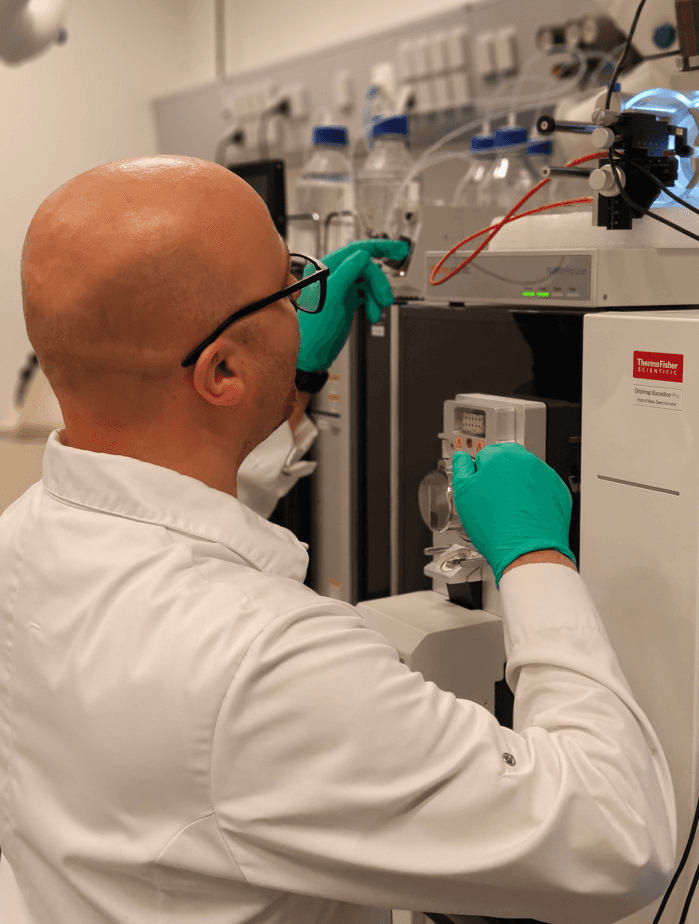
The results help drug developers make well-founded decisions about product quality and safety. To strengthen this work, Anabiotec has added the Thermo Scientific Orbitrap Excedion Pro to its mass spectrometry portfolio, giving it more ways to study complex biological molecules, host cell proteins and trace impurities (e.g. nitrosamines).
An analytical measurement is only valuable when it provides answers to questions that matters during product development. Yet, finding those answers is not always straightforward. Differences between two molecular variants can be subtle, trace impurities can be masked by complex sample matrices, and even minor changes in molecular composition can have a significant impact on product quality.
Reliable detection is the first step, but understanding what is detected is equally important. High-resolution mass spectrometry (HRMS) combines accurate mass measurements with high resolving power to distinguish closely related molecular species, support the identification of unexpected signals, and provide quantitative information when appropriately configured. These deeper insights help development teams investigate unexpected findings, assess potential risks, and make better-informed decisions about the next steps in product development.

When the goal is to quantify a known substance at very low levels, a triple quadrupole mass spectrometer (MS) is often the most practical tool. Instead of scanning everything in a sample, it focuses on specific compounds and filters out the background, which makes it well suited to impurity testing where the same measurement has to be repeated reliably across many samples. At Anabiotec, our Waters Xevo TQ Absolute triple quadrupole MS complements the high-resolution systems for questions where robust and sensitive quantification matter most.
The Thermo Scientific Orbitrap Exploris 240 comes into play when a question calls for more than a single targeted measurement. Its high-resolution measurements make it possible to study molecules in detail, for example to compare closely related structures or to unravel complex biological samples, which helps to confirm what a molecule is and guides the next steps in the analysis.
The Thermo Scientific Orbitrap Excedion Pro is the newest addition to Anabiotec’s portfolio. It is designed for some of the more demanding questions in pharmaceutical analysis, such as detecting host cell proteins (HCPs), finding trace impurities like nitrosamines and analyzing complex protein samples that simpler methods cannot fully resolve, while its extra resolution also benefits proteomics research. For researchers working with difficult samples, this means one more option for getting the answers they need.
Biological medicines are produced in living cells, and some proteins from those cells can remain in the product even after purification. Host cell protein (HCP) analysis identifies which of these proteins are still present and in what amounts. The Thermo Scientific Orbitrap Excedion Pro supports mass spectrometry methods that can both identify and measure these residual proteins.
Some contaminants are present in such small amounts that they are easily missed in a complex drug sample. Trace impurity testing is designed to find these substances and measure how much of them is there. Nitrosamines are a well-known example: because they can pose a health risk even at very low levels, sensitive detection is important for patient safety, and the Orbitrap HRMS supports methods developed specifically to investigate them.
Studying proteins often goes beyond simply identifying them. Proteomics looks at which proteins are present and how they are modified, immunopeptidomics studies the small protein fragments that cells display on their surface so the immune system can recognize them, and phosphoproteomics focuses on phosphorylation, a common post translational modification that switches many cellular processes on or off. All of these fields depend on the kind of detailed measurements that high-resolution mass spectrometry can deliver.
Monoclonal antibodies (mAbs) are an important class of modern therapeutics. Characterizing them means examining their structure, any chemical changes and the slightly different variants that can form, which together give a clear picture of antibody quality. Anabiotec’s mass spectrometry capabilities also support structure elucidation: by measuring a molecule’s exact mass and the way it breaks apart into subunits and fragments, scientists can work out the identity of unknown compounds or degradation products.
“As biologics continue to become increasingly complex, analytical characterization is becoming more demanding than ever. We are seeing more sophisticated molecules, including engineered proteins, modified peptides, oligonucleotides and other advanced modalities, which require increasingly sensitive and information-rich analytical technologies” –
Geert Van Raemdonck, Sr. Scientist HRMS at Anabiotec.
Anacura brings together complementary expertise across pharmaceutical development and the life sciences. Anabiotec provides integrated analytical solutions for drug development and for chemistry, manufacturing, and controls (CMC), the part of development that makes sure a medicine is produced consistently and to the required quality, while OHMX.bio offers multi-omics services, from genomics and transcriptomics to proteomics, together with bioinformatics. Discovery Studio combines laboratory work on cells with translational bioinformatics to speed up research and development, and Labo Nuytinck is the group’s clinical diagnostics lab. Anacura is a member of hollandbio, and also takes part in the cross-border ATMP XB Interreg project, which strengthens the Flemish-Dutch biotech community working on advanced therapy medicinal products such as cell and gene therapies.
In drug development, a single technique rarely answers every question. By combining in-depth measurements with high-resolution mass spectrometry, Anabiotec can investigate impurities and characterize complex molecules right down to small structural differences. Because every project is different, with its own modalities, detection needs and scientific questions, the team selects the approach and instrument that best fit the work at hand. For pharmaceutical and biotechnology companies, the result is a clearer view of their product and a stronger basis for decisions that depend on reliable data.



