Career
From Challenging the System to Changing It: Hanneke Takkenberg on Women’s Health and Leadership
6 min read
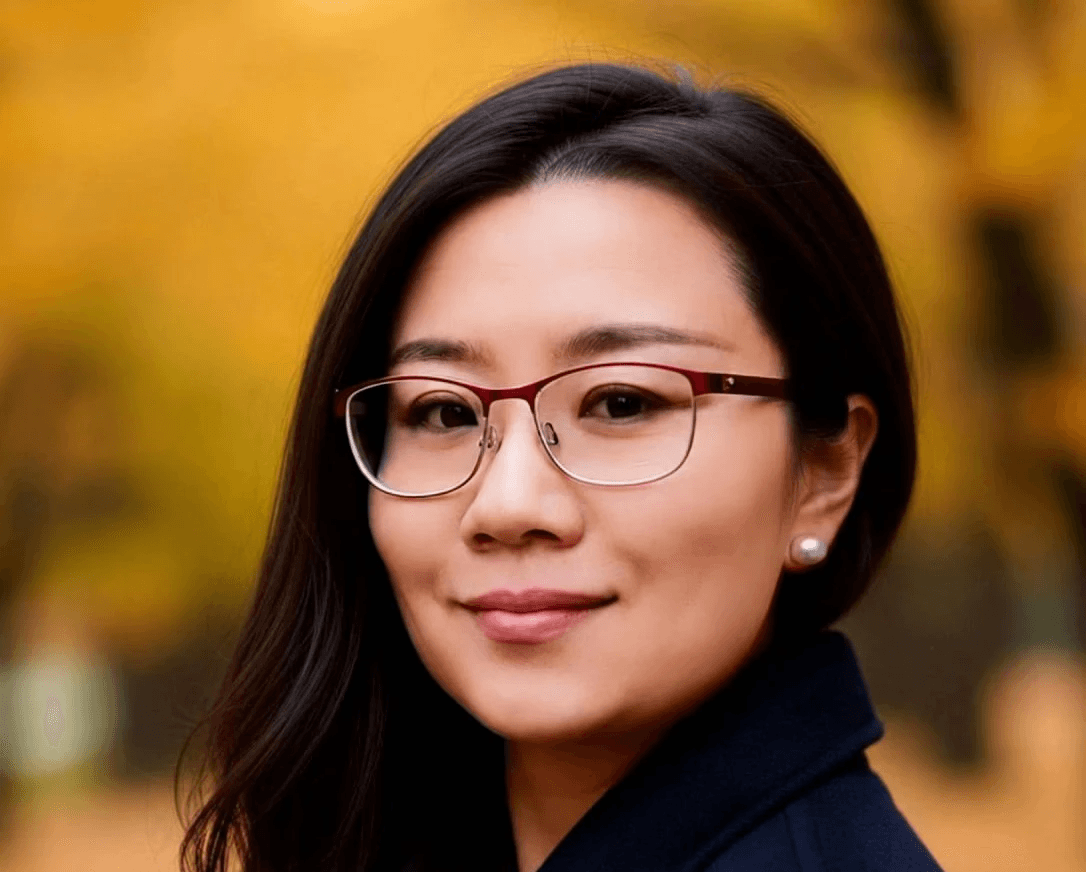
This June, I had the great honour of returning to the BioBusiness Summer School 2026, this time both as a speaker and as a participant. For me, it felt like coming back to a place that once helped me understand the bridge between science and business. Now, as a BBSS alumna, I was grateful to return and share my own experience with a new generation of PhDs, postdocs and early-career professionals who are exploring their future in the life sciences industry.
By Wen Koster, PhD
BioBusiness Summer School has become a meaningful part of the Dutch life sciences ecosystem. For nearly two decades, this programme has helped young scientists look beyond the familiar path of academia and discover how their scientific training can create value in business, biotech, pharma, innovation, entrepreneurship and many other career directions.
Behind this success is the long-term dedication of Hyphen Projects, who have continued to create a learning environment where science meets business, and where young researchers can ask practical, honest and sometimes vulnerable questions about their future.
What makes BBSS special is not only the content. It is the atmosphere. There is curiosity in the room. There is ambition. There is also uncertainty, the kind many scientists feel when they start asking:
Where do I fit outside academia?
How can I translate my scientific experience into industry value?
BBSS creates a safe and inspiring space for those questions. It gives people not only information, but also perspective, language and confidence.
I was very glad to have the opportunity to attend three sessions, and each of them gave me valuable insights and much food for thought.
One of the most inspiring sessions I attended was the keynote by Jan van de Winkel, President and CEO of Genmab: "Building a Leading Innovation Powerhouse".
Listening to Jan’s story, I was deeply touched by what real health innovation requires.
From the outside, a successful biotech company can look like a smooth success story. But behind that success are years of persistence, uncertainty, difficult decisions, scientific depth, strong culture and the courage to keep building.
What stayed with me most was not only the business success of Genmab, but Jan’s deep understanding of human value in innovation.
He shared a small but beautiful story: at the company building, he designed a very comfortable coffee corner and offered top-quality coffee. The intention was not simply to create a nice space. It was to attract professionals and experts from outside the company to visit more often, stay longer, exchange ideas and share their latest research insights with Genmab employees.
To me, this was a powerful example.
Innovation does not only happen in formal meetings. It also happens in human conversations. In trust. In curiosity. In the informal spaces where people feel welcome to share what they know.
A coffee corner can become more than a coffee corner. It can become a place where fresh insights enter the company, where people connect across boundaries, and where innovation culture is quietly strengthened.
That story reminded me that building an innovation powerhouse is not only about strategy, technology or funding. It is also about creating the right human environment for ideas to flow.
Another session I appreciated was "Business Model in Practice: Service Model" by Mauro Muraro, Co-founder and CEO of Single Cell Discoveries.
In life sciences, we often talk about products, platforms, patents and pipelines. But Mauro’s session highlighted another important way to create impact: the service model.
A service company creates value by helping clients solve scientific problems with expertise, quality, speed, customization and reproducibility. The value is not only in one invention. It is in the ability to understand the client’s question deeply and deliver reliable results again and again.
For PhDs and postdocs, this is an important lesson.
Not every life sciences career has to be about owning a product or building a therapeutic pipeline. Some careers create impact by enabling many other scientists, companies and teams to move faster and make better decisions.
This, too, is health innovation.
The session by Margarida Martins from the Alliance Manager of Genmab on "Project Management & Alliance Management" brought another essential layer: collaboration.
In biopharma, partnerships are not just contracts. They are living relationships. They require partner selection, shared goals, clear agreements, trust, communication and careful management throughout the lifecycle of collaboration.
What I found especially valuable was that Margarida also shared her personal career story. She spoke about designing her own path with clarity, confidence and courage.
During the lunch break, she generously shared practical advice on how to reach the right people when exploring career opportunities. Her message was simple and useful:
"Do not only apply into silence. Understand the ecosystem. Networking. Find people close to the role, the team or the decision context. Approach them thoughtfully, and make it easy for them to understand who you are and where you can create value."
For young scientists, this kind of advice can be extremely helpful.
Because career transition is not only about qualifications.It is also about visibility, relationships, and timing.
My own session focused on moving from academia to industry by building a Transferable Strength Map.
The core idea was simple: many PhDs and postdocs already have valuable strengths, but those strengths are often hidden inside academic language.
Research trains people to solve complex problems, manage uncertainty, learn fast, communicate evidence, work independently and stay resilient through long processes. These are not “just academic skills”. They are transferable strengths.
The challenge is learning how to translate them into the language of industry value and then use that clarity to identify career paths that feel like a natural fit.
That is why identifying a natural-fit career path is an important first step. Because different career paths in the life sciences ecosystem require very different strengths, personalities, working styles, and ways of handling real-world complexity.
When there is better alignment between a person’s natural gift, academic strengths, values, and way of working, the transition from academia to industry becomes much more grounded.
The message I shared at the end of the session:
A career is not designed once.
It is crafted over time, through strengths, opportunities, constraints, and feedback from the world.
Sometimes we shape the path.
Sometimes the path shapes us back.
That is the art of crafting a career.
Looking back, BBSS reminded me again how much value it creates for PhDs and postdocs.
Academia trains scientists to go deep.Industry often asks them to connect wider.
Many young researchers know they are capable, but they do not yet know how to describe their value outside academia. BBSS helps close that gap.
It shows that there are many meaningful career paths in life sciences: business development, project management, alliance management, consulting, entrepreneurship, regulatory affairs, investment, product development, communication and many more.
Most importantly, BBSS helps participants realize:
I have options.
My skills are transferable.
My scientific training can create value beyond academia.
There is not only one path.
I left BioBusiness Summer School 2026 with gratitude.
Gratitude for the organizer, Haifen Hu and her team continue to build this platform with care and long-term dedication.
Gratitude for the speakers, who shared not only knowledge, but also honest stories from the real world of biotech and life sciences.
Gratitude for the participants, whose questions reminded me how much courage it takes to explore and expand a new professional identity.
For PhDs, postdocs and early-career scientists who are curious about industry, BioBusiness Summer School is much more than a course.
It is a bridge.
A bridge from academia to industry.
From scientific expertise to transferable value.
From uncertainty to possibility.
From research training to real-world impact.
And sometimes, the first step is simply to enter the right room, a room where science, business, people and possibility meet.
BioBusiness Summer School is one of those rooms.
Learn more about the next edition of BioBusiness Summer School here.