

Innovation
Amplio Pharma reports positive early clinical results for NovoBioJect
On March 26, 2026, the Innovation for Health conference hosted its second edition of Women's Health Pitch Session, a showcase of ten startups (selected out of more than 30 submissions) presenting their solutions to leading experts and investors. The session, organized in collaboration with Health~Holland and IDE Group, highlighted a new generation of solutions aiming to close the long-standing gap in women's health. Chloe Innovations walked away with €10,000 in sponsor support to accelerate their market entry.
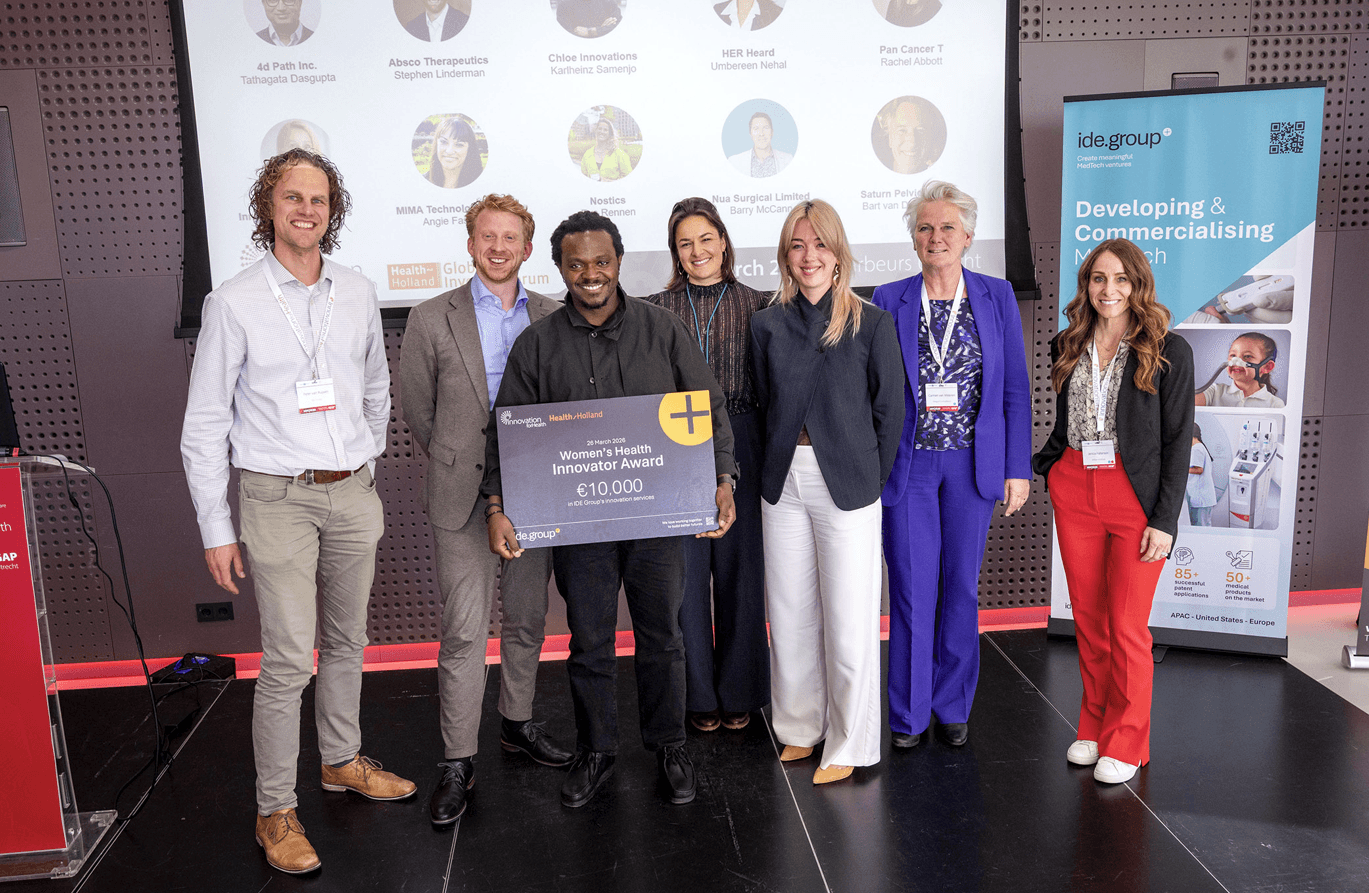
Fltr: Peter van Ruijven, Daan Hittema, Karlheinz Samenjo, Violet Defourt, Sjanna Bosma, Carmen van Vilsteren, Jenica Patterson Photo by:
Is it still needed to explain why Women Health matters?
Unfortunately yes.
Women live longer than men yet spend more of their lives in poorer health. Historically, women's health has received limited research attention and funding, resulting in significant gaps in data, knowledge, and available treatments. Despite representing more than half of the world's population, only 2% of healthcare innovation funding is directed toward women's health (World Economic Forum, 2019).
For some years now, as the scale and impact of these gaps have grown increasingly visible, a new wave of innovators has begun to shift that reality, tackling some of the structural and systemic barriers that have slowed progress.
The results are starting to show. The Femtech sector is now growing at a rate 160% faster than the broader healthcare market, representing a global market value of over €55 billion (Statista, 2025). In Europe, the picture is equally compelling: it reached €2.4 billion in 2024 and is projected to nearly quadruple to €9.7 billion by 2033, growing at close to 17% annually (Market Data Forecast, 2025).
So why is it still difficult to get funding?
Despite the massive market opportunity, early-stage women's health companies continue to run into the same walls.
First, there is a knowledge problem: many male investors do not understand the products, the conditions they address, or the real value they could unlock for women’s lives. Second, the majority of Femtech founders are women, which are still, consistently, undervalued when it comes to funding. Also, the lack of data on women’s health creates uncertainty for investors, making it harder to quantify the market potential.
But here's the reframe: that gap is not a weakness. It's an opportunity. The market is far from saturated. Reproductive health, menopause care, maternal health, chronic conditions that disproportionately affect women, these are underserved spaces with urgent unmet needs and real commercial potential. The upside for whoever moves first is enormous.
A snapshot of where femtech is heading.
This year's session covered a striking breadth of women´s health subsectors. Reproductive and maternal health remained well-represented, with Nua Surgical and Saturn Pelvic Health pushing the boundaries of pregnancy and postpartum care. MIMA Technologies, Chloe Innovations, and HER Heard brought sharp focus to gynecological health and patient-centered solutions that put the woman's experience at the center of care.
But the session also signaled other subsectors. Nostics, Pan Cancer T, Absco Therapeutics, Innovene Therapeutics, and 4D Path stretched the conversation into diagnostics, oncology, and therapeutics, a clear sign that investment is no longer just chasing reproductive health, but increasingly targeting the full spectrum of conditions that disproportionately affect women.
The ten founders who took the stage:
# | Company | Founder |
1 | Tathagata Dasgupta | |
2 | Stephen Linderman | |
3 | Karlheinz Samenjo | |
4 | Umbereen Nehal | |
5 | Alia Kozlova | |
6 | Angie Fasoula | |
7 | Eva Rennen | |
8 | Barry McCann | |
9 | Rachel Abbott | |
10 | Bart van Diepenbeek |
The jury, comprising Carmen van Vilsteren (Angel Investor & coach for female CEOs in Life Sciences & Health), Peter van Ruijven (Site Lead, IDE Group), Violet Defourt (CEO, Rapidemic and co-winner of the 2025 Women's Health Pitch Session), and Jenica Patterson (Sr. Director, Health Pillar, Milken Institute), evaluated all ten startups on innovation, commercial potential, and the quality of their presentation.
The winner.
The prize went to Chloe Innovations, recognized for its potential to disrupt the medical device market with a simple, low-cost solution addressing a big gap in gynecology.
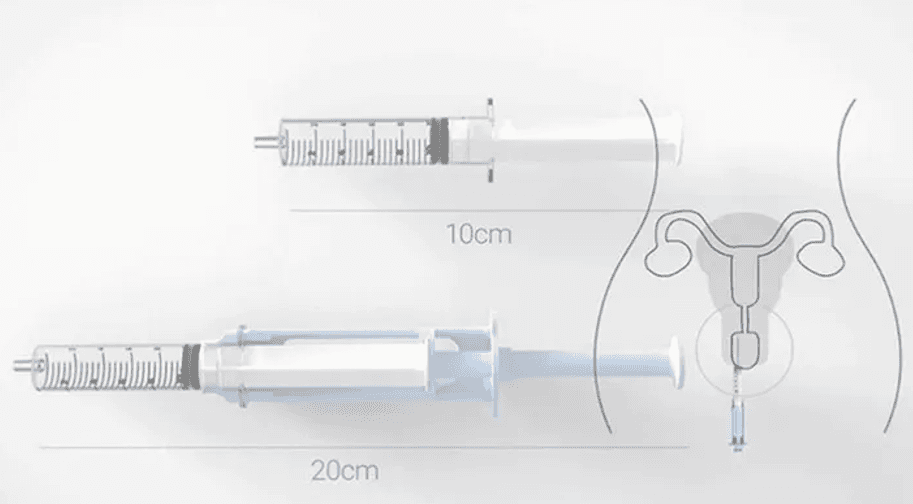
The Chloe SED – winner solution
The Chloe SED (Syringe Extension Device) is a simple medical tool to ease pain during gynaecological care worldwide, developed by industrial designer Karlheinz Samenjo.
Every year, an estimated 25 million women undergo gynecological procedures without pain relief, especially in low-income countries, and the Chloe SED is a roughly one-euro extension piece that attaches to a standard syringe, making local anesthesia to the uterus much easier and more affordable to administer.
Doctors in Cameroon, Kenya, Tanzania, and Uganda are eager to begin using the SED. Dutch gynecologists also see clear advantages: the device is more durable, dramatically reduces costs compared to the long needles currently used in the Netherlands (which can cost up to €50 each), and enables gentler, safer, and more controlled administration of pain relief.
“My goal is for Chloe Innovations to become available worldwide in hospitals and eventually even in pharmacies, also here in the Netherlands. We will only succeed if every woman has access to safe, affordable pain relief”.
Karlheinz Samenjo, CEO & Founder of Chloe Innovations
The bottom line
The Women's Health Pitch Session proved one thing beyond doubt: the talent is here, the innovation is here, and the solutions are here. Chloe Innovations may have taken the prize, but every solution on that stage tackled critical gaps in women’s health and served as a powerful reminder of how much remains to be done.
What is missing to bridging the gap is not ambition. It is capital, partnerships, and the courage to back ideas that have been overlooked for far too long.
Written by Maria Blanch