

Career
Employeneurship: TMC's Model for building lasting careers in Life Sciences
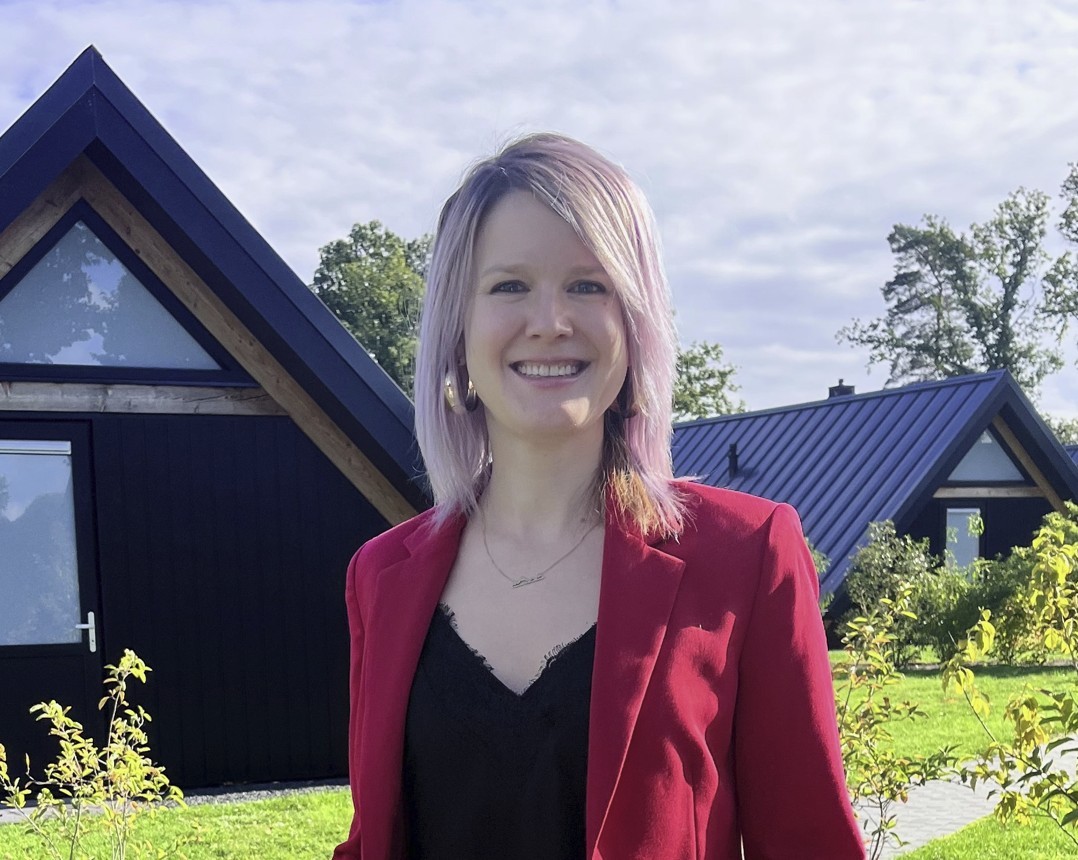
Drawing on her experience in academia, Isabelle Kohler established NextMinds to help PhD students navigate the transition to the biotech and biopharmaceutical industry.
This article is part of a partnership between BiotechNews and BioPitch. See here for the original article on BioPitch.
In 2012, Isabelle Kohler approached a researcher at a scientific conference and told him something audacious. ‘’One day, I’m going to work with you’’, she told him. Eight years later, she did. That researcher became her manager at the Vrije Universiteit Amsterdam, where she now works as an assistant professor developing novel methods for the analysis of illicit drugs.
This anecdote illustrates Kohler’s approach to career development and exemplifies the origin story of her company NextMinds. NextMinds is designed to help early-career scientists prepare for the next stage in their careers, as well as supporting PhD students throughout their PhD journey, providing support on topics related to well-being.
The dilemma of the helper
Isabelle Kohler’s path into science began with a compromise. ‘’I initially wanted to study psychology’’, she explains. ‘’I thought psychology was great because it enables you to help people, and I was fascinated by how the brain works. However, I worried about job prospects, or that it might take too long. I decided on pharmacy instead because it combined the scientific part, which I like, with the fact that I could help people.
This desire to help has always been in the back of my mind. In my current academic role, I help people within the university, and as an entrepreneur, I help people with NextMinds.’’
That desire to help would eventually resurface in unexpected ways. First, however, she had to discover that working in a pharmacy wasn’t what she had imagined. During her final year of studies in Switzerland, she completed a year-long internship. ‘’I realised that wanting to help people is one thing, but they also have to want to be helped by you. I couldn’t see myself doing that for 40 years, especially since people didn’t seem to care about my experience. So, I decided to pursue a career in research instead.’’
Isabelle Kohler pursued a PhD in pharmaceutical sciences at the University of Geneva, focusing on the development of methods to measure substances in body fluids. ‘’I liked the way these methods could allow us to see something in our samples, would that be for clinical, forensic or pharmaceutical applications. I particularly enjoyed working with illicit drugs due to their fascinating effects on the mind and brain. After completing my PhD, I felt just like many others: I had no idea what I wanted to do with my life. I thought it was time to travel and experience life outside my own country. Twelve years ago, I came to the Netherlands for a postdoctoral position at the Leiden University Medical Center. There, I worked on metabolomics, which is one of the approaches used to achieve personalised medicine. It’s fascinating because you can discover new biomarker candidates for the early diagnosis of diseases or new treatment therapies.’’
The Leiden effect
Isabelle Kohler found that the work culture in the Netherlands, particularly at Leiden’s Bio Science Park, differed from her earlier experience in Switzerland. Her boss at Leiden, Thomas Hankemeier, had co-founded MIMETAS in 2011. ‘’He had an entrepreneurial mindset, and many people at the Leiden Academic Centre for Drug Research (LACDR) are connected to a spin-off company in some way. When it comes to work, Switzerland focuses on quality. During my PhD, I had to be absolutely certain about what I published. I had to repeat experiments 20 times. Everything had to be perfect’’, she recalls. ‘’This is great for learning to produce high-quality work, but it’s also slow. When I came to the Netherlands, I noticed that people were much more daring and creative. At the Bio Science Park, this mindset is evident.’’
Five years ago, she moved to VU Amsterdam from Leiden, first securing a tenure-track contract and obtaining a permanent position more quickly than expected. ‘’I started with a temporary contract, which gave me five years to develop my research and see how things would progress. I obtained a permanent contract after two and a half years. Along this journey, I undertook some coaching to gain clarity on my strengths and career aspirations, where it started to get clear that I was not recognizing myself in the traditional professorship path. I had always been aware of this, but at a certain point in my academic career, I got tired of publishing papers that have no direct impact and spending months writing grants that don’t get funded. I also developed long COVID for more than two years, which took over most of my life. That’s during those hectic years that I decided to start my own company to give me more flexibility and fulfilment, even though I didn’t know if it would work.’’
More troubling was the gap between academia’s promises and its reality. ‘’People say you have a lot of freedom and can have an impact as a professor. In reality, it’s not always true. You have so many other tasks that take you away from deep work and fulfilling tasks. I became frustrated because I couldn’t find the time to do what I really liked, including research. Although I enjoy many aspects of academia, I dislike the idea of publishing papers that have no direct impact. I don’t want to get stuck in the same position for 25 years, doing the same thing on autopilot. That’s not for me. I started to feel restless and realised that I needed to do something about it.’’
Why don’t more academics make the same decision as you?
‘’I can’t speak for others, but people in academia seem to be so busy that they don’t have time to think. In some ways, it’s comforting to be on autopilot. Once you’re in academia, you know what to expect. You know you have to work hard, but the only surprises are the grants you get or don’t get.
I want to be happy at work, so I always look for options that bring me this joy and purpose – even if that means stepping out of this comfort. Many people don’t want to do that, particularly since the assistant and associate professor stage is when you establish a more stable life outside work. Many of my colleagues want to start a family, secure a permanent contract and buy a house. These are things that I don’t relate with. I’m not sure if I’m unusual, but the way I’ve structured my life gives me more freedom.’’
From academia to entrepreneurship
Kohler founded NextMinds almost three years ago. At the same time, she started a training in coaching in counselling. ‘’I realised that I wanted to develop my listening skills and learn how to coach people effectively. I didn’t want to call myself a coach without any training or experience. I decided to do a one-year training course in coaching and counselling, which I finished last year. I am now in the second year. Through NextMinds and as an academic, my mission is to support early-career scientists throughout their academic careers and beyond. I have noticed that two topics constantly come up in my conversations with early-career scientists: well-being in academia and career preparation. I receive a lot of attention for career preparation, even though it’s not the only thing I focus on. This is interesting because the older generation still believes that 90% of PhD students want to continue in academia, when in fact it’s the opposite.
Indeed, it’s more like 90% who want to leave academia to work in industry or elsewhere, but they often don’t have a clear idea what their options are.’’
The workshop model – her second ticket – has worked well. ‘’Universities, institutes, and conference organizers came to me and said: ‘Can you please help us with career preparation?’. I realized that students need help even earlier in the game, they need to know what’s available after their PhD or postdoc, how to choose a path, how to use their network, and how to use LinkedIn. That’s what I’m doing a lot of now. I’m also working with Principal Instigators who apply to grants where NextMinds is listed as an associate partner to give workshops and webinars to PhD students via the funding allocated for training PhD students.’’
What options do they actually have?
‘’There are so many options available in a wide range of sectors. The traditional academic route, which involved climbing the academic ladder towards becoming a full professor, is now an exception. The large majority of PhD graduates will pursue career outside of academia, for instance starting as scientist in an R&D department in industry, or securing a research role in a research or governmental institute.
But that’s only the tip of the iceberg, as many options exist: entrepreneurship, communication, teaching, consultancy, policy-making, healthcare, publishing or editorial industry, patent law, marketing, sales, non-government organizations, etc. There are even more options than expected within the academic walls that are not the traditional professorship path: junior lecturer, research technician, or working for the technology transfer office.’’
What the industry actually wants
The contrast between how academics present themselves and what the industry values is striking, and it’s costing both sides, according to Isabelle Kohler. ‘’I often have PhD students come to me and say: ‘Here’s my CV. I’m not getting any interviews. Why?’. I read it and see that they mention, for instance, that they published ten papers in high-impact journals. But industry doesn’t know what this means. They want to see transferable skills. We, in academia, have almost no idea what industry or other organisations want. Some PhD students are interested in entrepreneurship, but they don’t know what it exactly means. That’s strange, because a university should be a great place to develop entrepreneurial skills, yet students still don’t see it as such. I believe that we don’t provide the necessary knowledge in academia for adequate career preparation, and PhD students are too busy with their own work to prepare for the next step.’’
Kohler’s advice for scientists seeking to transition is deceptively simple. ‘
’Go and talk to people outside. You can also connect with them online via LinkedIn. Many people won’t answer, but that doesn’t matter – because some will. Just go to free events and ask people what they do. What does your job entail? What tasks do you have, and what skills do you need?’ This will give them the knowledge they need. Without this information, you can’t choose a meaningful or fulfilling career. That’s what’s missing.’’
Do you have specific tips for networking for people coming from academia?
‘’I see networking as just people talking. I like this conversation because we’re talking about so many things. We can talk about the weather, playing an instrument, or how our families are doing. You need to make a genuine connection. Don’t go into networking with a hidden agenda. Just try to make a connection. The people you talk to may not be useful immediately, but they might be in 10 years’ time. I met my current boss at a conference in 2012. I told him: ‘One day, I’m going to work with you’. And that happened eight years later. I knew it would happen eventually.’’
About Isabelle Kohler
Isabelle Kohler is a tenured Assistant Professor of Bioanalytical Chemistry at Vrije Universiteit Amsterdam (VU), specialising in clinical and forensic toxicology. A qualified pharmacist, she obtained her PhD from the University of Geneva in 2013. Her research focuses on developing novel, mass spectrometry-based approaches to analyse drugs and metabolites in biological fluids. Prior to joining VU Amsterdam, she held research positions at Leiden University Medical Centre and Leiden University.
Beyond her scientific achievements, Dr Kohler is a dedicated educator and trained coach passionate about redefining the academic experience. Drawing on her extensive experience of supervising students, for which she was nominated for a Faculty of Sciences Teaching Award, she founded NextMinds. Through NextMinds, she supports early-career scientists by providing coaching on mental well-being and helping them bridge the gap between academic training and industry demands.


