

Career
Employeneurship: TMC's Model for building lasting careers in Life Sciences
Barbara Brunnhuber has spent more than two decades at the crossroads of science, biotech, and business - without ever subscribing to conventional leadership formulas. As Executive in Residence at BioPartner and CEO of Mireca, she believes leadership is less about performance and more about responsibility, trust, and empowering authenticity.
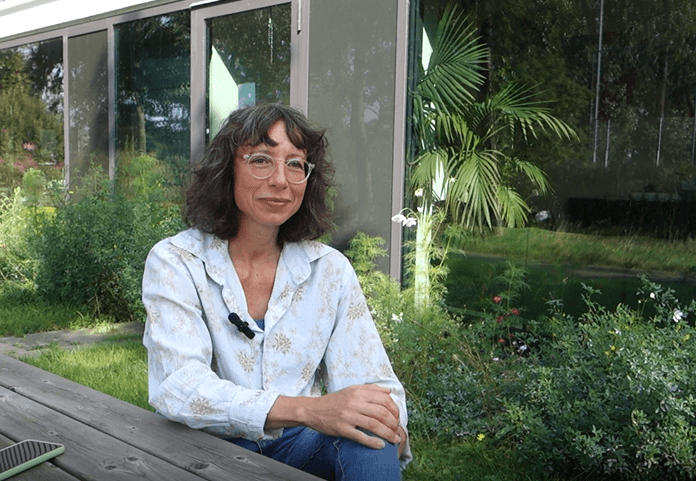
Barbara Brunnhuber Photo by: Frédérique de Paus
In this edition of TOPX Leading Ladies in Life Sciences, she sat down with TOPX member Sarah Opitz and reflects on honesty, entrepreneurship, and why biotech may need to add another kind of success story.
Barbara Brunnhuber says people often think she’s very nice.
Until she isn’t.
“If something goes against my principles—egoism, unfairness, people taking from others—I can’t not say something,” she says. “First, it shows in my face. A colleague once told me: when you get angry, I can already hear your pocketknife click.”
She pauses, amused. She doesn’t, she clarifies, actually carry a knife. But the image fits.
Barbara is direct, protective, and constitutionally unable to stay quiet when she believes something is genuinely wrong. “I don’t allow people to wipe the floor with me,” she says. “Or to damage people I’m very fond of.” That tells you more about how she works than any title ever could.
After more than two decades at the interface of science and business in the life sciences, Barbara has come to a clear view of leadership: it isn’t about polish, performance, or knowing better. It’s about judgment, and resisting the pressure to harden into someone you are not.
She learned that the hard way.
“I don’t have a vision,” she says cheerfully of her career. “It’s always been a mess.”
She doesn’t mean chaos so much as refusal. She never mapped out some grand trajectory. She moved section by section, according to what felt right and what she could no longer, in good conscience, keep doing. Management consultancy came first, and with it an education in how industries think, how goals are set, and how people learn to perform inside systems not of their own making. She performed too, for a while. “It was very energy-consuming,” she says. “You’re fulfilling other people’s wishes.”
Eventually the cost became visible: two burnouts, and a company collapse under venture-capital pressure so corrosive she still pulls founders aside to warn them. By the time the second burnout came, the choice had become stark. Continue down the same road—elbowing, pleasing, performing for people she neither respected nor trusted—or refuse.
“The turning point was realizing that if I continue like this, I have to become someone I’m not. And I hate that.”
So she made the kind of decision many professionals would consider reckless: she decided not to grow a thicker skin.
In some workplaces, toughness is treated as professional progress. Barbara came to the opposite conclusion. A thicker skin, she realized, would cost her the very thing that made her useful: the ability to read people, to connect, and to sense when something is off before anyone says it out loud.
Instead, she chose people she trusted and places where she could work in her own way, even if that meant a smaller world. “I thought, this is going to be a very small pond to fish in,” she remembers. “But once you find it, even the smallest pond can be a big ocean.”
That choice eventually led her to the teams where she now feels most at home, including Mireca and BioPartner, where she has, as she puts it with obvious joy, “the freedom of the idiot” to come up with ideas and run with them.

Ask Barbara what leadership looks like on an ordinary Tuesday, and she doesn’t reach for abstractions. She talks instead about preparation, responsiveness, and respect for other people’s time. On the day of our interview, she’d prepared carefully because, she puts it, “You sat down to talk to me, you do the work after, and I wanted to honor that.” Later that day she’d clear emails so others could keep moving, then head to the closing session of a year-long startup cohort—not to take the spotlight, but to applaud what the founders had figured out for themselves. “The cheering part,” she says, smiling, “is always enjoyable.”
Her decision-making style is equally practical. When there’s no clear answer, she sounds it out with two or three people she trusts so she can sharpen her own judgment. Then, as she says, “you cook your own decision.”
What she protects most carefully isn’t efficiency or prestige, but atmosphere. “That people are honestly nice to each other.” It sounds almost old-fashioned when she says it, but she means it. She can’t stand what she calls the “look-at-me performance,” especially when it comes at someone else’s expense. She’s deliberate about whom she recommends, whom she gives space to, and whom she amplifies.
What mattered most in Barbara’s own career was trust with freedom. “Real trust is: I believe you can do this, and you can do it your way. Not my way.” She’s had that with Pieter Gaillard, her long-time collaborator at Mireca. And the difference, she says, is practical: the work becomes energizing instead of draining. You stop second-guessing, stop defending yourself, and simply get on with it.
Barbara is careful about how she talks about being a woman in life sciences. She doesn’t frame her story around personal mistreatment. In fact, she recalls being actively supported as one of very few girls in a chemistry high school. “I was the beloved best horse in the stable,” she says, laughing. “That worked absolutely in my favor.”
What she points to is subtler. Female entrepreneurial energy, she says, is often immediately communal and societal—more oriented around people, relationships, and what something contributes beyond itself. The corporate and investment worlds she moved through rewarded something narrower: performance, shareholder value, speed.
“We’re constantly adjusting,” she says. “The standard male doesn’t even have to think about it; for him, the water isn’t alien. Women just do it anyway, because we’re so strong.”
Her sharper critique, though, is broader than gender. It’s about biotech itself, and the model of success the sector still treats as normal.
Venture capital is still presented as the default route in life sciences, even though biotech’s timelines, attrition rates, and capital demands make it a poor fit. What it tends to reward is a certain kind of founder and a certain kind of company: visible, fast-growing, exit-oriented, built to satisfy investors on a timeline that often has little to do with scientific reality.
Who is overlooked are the people building more organically: companies that grow alongside families, products that reach patients quietly, businesses that may never become unicorns but may actually last.
And she says this out loud, even when the room would rather she didn’t. She doesn’t expect to win everyone over. But if one founder realizes there’s another way to build, that can be enough.
For all her fierceness, what steadies Barbara isn’t force at all. It’s silence.
She’s spent years learning how to find it in practical ways. When stress rises, she tells her mind—literally—to stop. “Shut up and breathe.” Then she repeats it until the noise begins to settle. In the mornings she protects a stretch of silence before speaking to anyone. She returns to a small book of daily ideas and tries to find, as she puts it, “the theme of today” before the day takes over.
“It’s like an old radio,” she explains. “The more you do that, the better you get at finding the right frequency. And when you find it, it feels like relief.” Reading, breathing, yoga, gardening, time with her family—it’s all part of how she returns to herself.
Her definition of success has changed accordingly. It’s now harder to fake. “How close have I come to my inner home? And have I helped others get closer to theirs?”
She knows it when she sees it: a startup finding its own color box, a team moving from searching to becoming. “That’s when I think: I’m going to get a hug. This is it.”
Her own life, meanwhile, has become less compartmentalized than it once was. Work and home are no longer separate boxes; they’re more like a nature garden, with weeds and flowers growing together. She’s learned to find that beautiful rather than untidy.
The hardest part, she says, is being honest with herself about what she actually feels, rather than what she’s been trained to feel. But that, too, is a practice. “If you keep repeating what’s easy,” she says, “you’re not growing.”
Some of that steadiness, she says, also comes from family. Her partner of twenty-five years—eighteen years older, English, part of a patchwork family, no conventional story—is, in her words, “a rock in the water.” What she values most is that he can make her laugh at herself without making her feel bad.
“That is a gift,” she says. “To be seen completely, and still made to laugh.”
She doesn’t want younger women to follow her path. “Please don’t,” she says. “Forge your own.”
She has two things she wants them to know. First: don’t feel sorry for yourself. Recognize that you are immensely creative and powerful, and use that. Second: don’t spend your life fighting what’s already there. Build something new, in uncharted land.
It’s what she tries to do herself: create the space for others to find their own way. “It’s not about knowing better,” she says. “Leadership is the art of bringing out the best in everyone and everything.”
Profile Barbara Brunnhuber, Ir MSc
Executive in Residence, BioPartner | CEO, Mireca
Three years in management consultancy, followed by 23 years at the interface of science and business in biotech, life sciences, and health. Known for principled leadership, frank advice to founders, and a clear-eyed critique of how biotech is funded and grown.


