
Career
From Challenging the System to Changing It: Hanneke Takkenberg on Women’s Health and Leadership
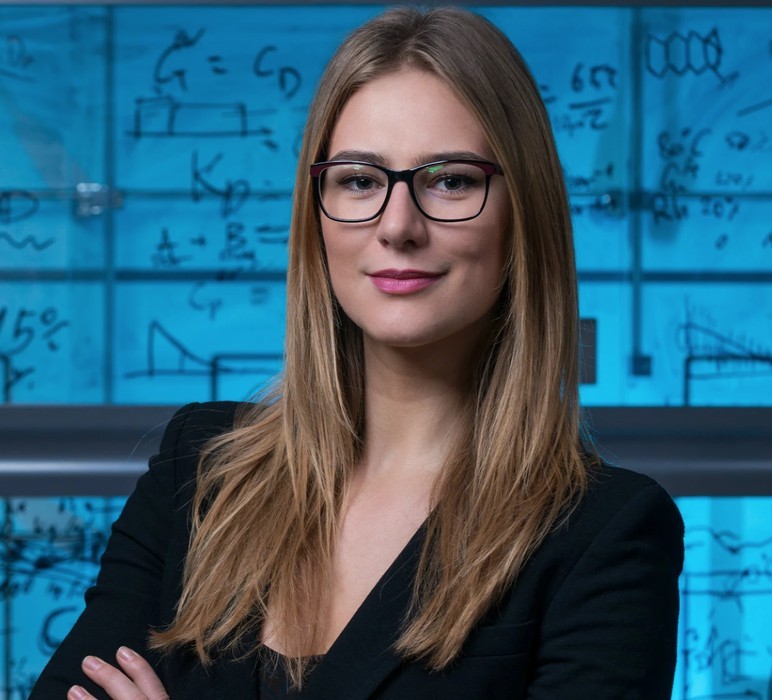
Kinga Matula has built a life defined by movement - geographically, intellectually and professionally. Over the years, she has packed everything she owns into two suitcases more times than she can easily count. Originally from Poland and now based in the Netherlands, she estimates that she has changed countries or cities nearly 30 times. Curiosity has been a constant companion throughout that journey - taking her from mathematics and physics into biotechnology, oncology research, venture capital and, ultimately, the helm of her own biotech company. In this TOPX Leading Ladies in Life Sciences interview, TOPX member Ana Cascalho spoke with Kinga about her unconventional journey through science, entrepreneurship and innovation.

By Ana Cascalho for TOPX Network & BiotechNews.
Today, as founder and CEO of QurieGen, Kinga is working to solve one of the most fundamental challenges in drug discovery: decoding what is happening inside a cell. Yet despite leading a company operating at the intersection of biology and artificial intelligence, Matula believes the industry's biggest challenge is not AI itself.
“We often talk about AI as the solution,” she says. “But in order to cure disease, first we need to understand - and in order to understand, we need to measure.”
It is a perspective that cuts through much of the excitement surrounding AI-driven drug discovery. While algorithms continue to improve, Matula argues that progress ultimately depends on the quality of the biological information feeding those systems. Without meaningful data, even the most sophisticated computational tools will fall short.
SCIENCE WITH A PURPOSE
Matula describes herself as someone driven by curiosity, but also by a strong sense of purpose. Growing up, she was influenced by two very different worlds. Her father brought an engineer’s mindset, focused on solving practical problems and building things that worked. Her mother worked in a hospital, exposing her early on to conversations about patients, treatments and the realities of disease.
“I grew up with this dual perspective,” she reflects. “Things needed to be useful, but they also needed to help people.”
For a time, she considered becoming a doctor. Then reality intervened.
“I’m terrified of blood,” she laughs.
Instead, she began asking herself a different question: how could she help the greatest number of people? The answer led her towards science. Developing new diagnostics and therapies, she realised, could potentially improve the lives of millions. That ambition shaped an academic journey spanning mathematics, computer science, physics, biotechnology and physical chemistry before eventually leading her into oncology research. Throughout her career, she gravitated towards interdisciplinary environments, working at the interface between biology, chemistry and technology rather than within traditional boundaries.
A TURNING POINT DRIVEN BY PERSONAL EXPERIENCE
During her postdoctoral research, science and personal experience collided unexpectedly. While developing a diagnostic tool and routinely donating blood for experiments, Matula discovered that she herself was an oncology patient.
The experience was deeply personal, but it also reinforced questions she had already been asking herself. How could scientific discoveries move beyond publications and conference presentations? How could research generate tangible benefits for patients?
“As a scientist developing novel treatments, you have the potential to impact orders of magnitude more lives,” she says.
The diagnosis strengthened her determination to focus on science with direct real-world relevance and ultimately played an important role in shaping her future career decisions.
FROM ACADEMIA TO ENTREPRENEURSHIP
Like many researchers, Matula initially imagined a future in academia. Entrepreneurship was not part of a carefully designed career plan. Instead, it emerged gradually through collaborations with pharmaceutical companies. As her team developed new technologies, the same pattern kept appearing. One company approached them with a problem. Then another. Then another. It became increasingly clear that the tools they were building addressed a broader need across the industry.
Rather than pursuing another postdoctoral position or moving into a conventional industry role, she chose to co-found QurieGen. The transition required learning an entirely new language. Fundraising, business development, hiring and strategy were far removed from the laboratory environment in which she had trained. To bridge that gap, Matula immersed herself in accelerator programmes across Europe and the United States, eventually participating in more than a dozen.
She also took a less conventional step. Frustrated by the challenges of fundraising, she decided to gain experience from the investor side of the table and worked as a venture capital analyst, conducting scientific due diligence on emerging companies.
“The best way to understand what investors are looking for is to sit on the other side of the table,” she says.
The experience proved invaluable, providing insight into how innovation is evaluated, financed and ultimately brought to market.
BUILDING ‘GOOGLE MAPS FOR CELLS’
At the heart of QurieGen’s mission lies a simple but ambitious objective: creating a deeper understanding of cellular biology.
Matula often describes the company’s vision as building “Google Maps for cells”- a platform capable of mapping biological processes with a level of resolution that has previously been difficult to achieve.
The company combines wet-lab experimentation with advanced computational approaches, integrating high-dimensional biological data with AI-driven analysis. Rather than relying solely on publicly available datasets, QurieGen generates much of its own biological data, an approach Matula sees as essential.
“AI can only be as good as the data we provide.”
This philosophy differentiates the company from many organisations focused primarily on algorithm development. For Matula, competitive advantage lies not only in computational power but in the ability to generate biologically meaningful information and interpret it in a way that advances understanding.
REDUCING RISK IN DRUG DEVELOPMENT
The implications of this work extend well beyond technology.
Drug development remains a lengthy, expensive and uncertain process. Despite remarkable scientific advances, most drug candidates fail, often after years of investment and development.
For patients, these failures represent more than financial losses. They can mean delayed access to effective therapies and missed opportunities for treatment.
By improving biological understanding earlier in the discovery process, QurieGen aims to reduce some of this uncertainty. Better insights into disease mechanisms can help researchers identify stronger targets, design more effective interventions and increase the probability of success further downstream.
Beyond its current collaborations with pharmaceutical partners, the company’s long-term ambition is to contribute directly to therapeutic innovation through the development of its own internal programmes.
NAVIGATING AN EVOLVING LANDSCAPE
The growing integration of AI into life sciences is also creating new regulatory and ethical questions. Across Europe and beyond, policymakers are increasingly focused on issues such as transparency, data governance and accountability.
For companies operating at the intersection of biology and AI, navigating these developments requires a careful balance between innovation and responsibility. Matula views this evolution pragmatically. While appropriate safeguards are essential, she also believes that regulation should enable scientific progress rather than unintentionally hinder it.
LEADERSHIP, RESILIENCE AND MINDSET
Leading a technology company requires a very different skill set from leading a research project. Scientific expertise remains important, but it must be complemented by strategic thinking, resilience and the ability to inspire others around a common vision.
For Matula, entrepreneurship is fundamentally a mindset challenge - “Eighty percent of success in entrepreneurship is mindset.”
The statement reflects lessons learned through fundraising setbacks, difficult decisions and the inevitable uncertainty that accompanies building a company from the ground up.
At the same time, she remains optimistic about the opportunities available to young scientists today. Career paths are becoming increasingly diverse, and researchers are no longer limited to traditional academic trajectories. Start-ups, venture capital, industry and interdisciplinary innovation ecosystems offer new ways to translate scientific expertise into impact.
LOOKING AHEAD
As biology, data science and artificial intelligence continue to converge, the potential for innovation in drug discovery is growing rapidly. Yet, as Matula’s work illustrates, technological advances alone are unlikely to transform medicine.
Progress will depend not just on better tools, but on seeing biology more clearly than ever before.
For Matula, that remains the central mission: generating the knowledge needed to develop better therapies and improve outcomes for patients.
Having spent her career moving between disciplines, countries and entirely different professional worlds, she is comfortable operating in uncertain territory. And while much of the industry remains focused on AI, she continues to return to a simpler principle.
“In order to cure disease, we first need to understand,” she says. “And in order to understand, we need to measure.”
It is a deceptively simple idea - one that may ultimately help shape the future of medicine.