If you ask Willem van Weperen what makes a great biotech CEO, then he won't give you the answer that most pitch decks would prefer. He won't say ‘vision'. Nor will he say technical insight, capital efficiency or the ability to recruit. Instead, he will say persistence, and then he will reach for a fairy-tale image that, in his telling, has almost nothing of the fairy tale about it. ‘’You need to kiss a hundred frogs before you find your prince or princess.’’
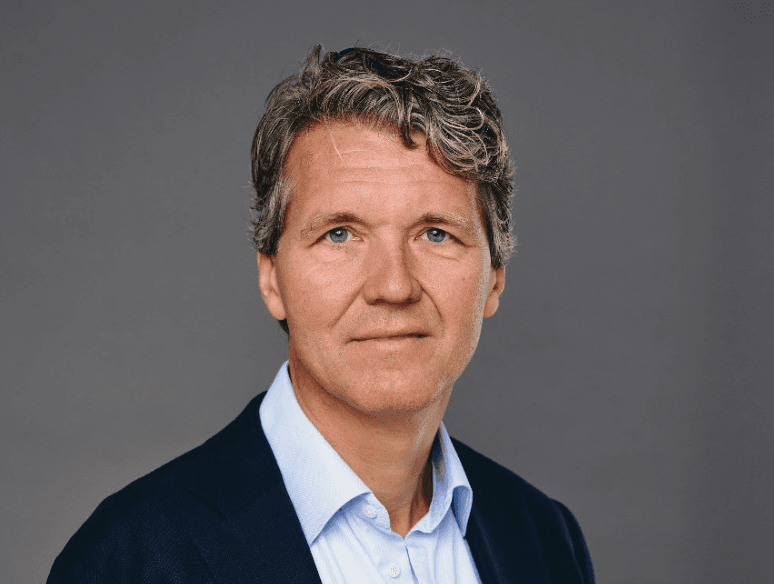
After thirty years in the rare disease industry – twelve of them at Genzyme, five running an early-stage Dutch startup that ultimately could not be funded further, and now a portfolio that runs from a Norwegian biotech working on phenylketonuria to the Head of Central & Eastern Europe of Genesis Pharma – Van Weperen knows what it means to kiss (at least) a hundred frogs to reach a goal. The frogs, in his account, are real. They are the investors who say no. The scientific experiments that can fail. The advisors who don't return your second email. The duty, more or less, is to keep going anyway.
The doctor in the snow
Willem van Weperen trained as a medical biologist and did a stint of lab work. ‘’In the end, it was not my calling. I ended up in the pharmaceutical industry. First as a clinical research associate at Glaxo before it became GlaxoSmithKline (GSK). I supported clinical research as project manager for migraine studies. After a year, I got the chance to work at Genzyme. Genzyme, where we were pioneering the rare disease model, has played a significant role in shaping my entire career. The most important thing I learned there was how to work closely with patients.’’
What does it really mean to work closely with patients?
‘’It’s more than just a tagline on a website that you see on almost every pharma company’s site. It’s something that really comes to life when a patient invites you to be present when they receive their infusion of your product, for example, and they say: ‘Please take cookies and we'll have a conversation about what this means for me and what this therapy has done for me’. Then you really start to realise the impact that these therapies can have. That has been kind of addictive.’’
Two months in at Genzyme, Van Weperen was on a plane to the north of Sweden in the depths of winter. ‘’There was a specific genetic population of patients with specific symptoms of this rare disease for which we needed to collect data, because we had to go to the EMA and provide them with information on this specific subset of patients in order to enable them to receive treatment. I still remember going to northern Sweden in the middle of winter to see a doctor with a big beard. He looked like Abraham Lincoln. He preferred to hunt in the snow or care for patients with this rare disease. This gave me an impression of how special it is to pioneer in this field. And I saw how important it is for this doctor to be able to treat his patients as well as possible. It also gave me the opportunity to collect this data with my small group of colleagues here in the Netherlands, compile a report and send it to the EMA.’’
You started at Genzyme in the early nineties, at a time when the company was pioneering the treatment of rare diseases under the leadership of Henri Termeer.
‘’It was fortunate that I started in that area, as there were no other companies pioneering the rare disease model. I also think it took courage on the part of Genzyme's CEO at the time, Henri Termeer, to price their first product at such a high cost per patient. But that was the only way to make it happen.
Had he not done so, the entire business model would not have worked. On the one hand, it is challenging because the more patients with a rare disease that need to be treated, the more difficult it is to charge a higher price per patient. It also requires a lot of education to make people understand that the rarity of a disease determines the price per patient.
However, rarity also influences the budget impact. Therefore, the total budget impact can still be very small even if the price per patient is high. While research and development costs usually fall within the same range for rare and less rare products. This is a formula that people need to keep in mind. It's something I've learned over the years, and I hope to continuously find the right balance for patients and society.’’
It’s about the simplicity
Later, Willem moved to Boston at the invitation of David Meeker, the successor to Henri Termeer. ‘’He exposed me to a new international environment that challenged me and made me step up to the next level. It was sometimes hard work, but to grow as a person, you need these changes of environment and new challenges. I was relatively young, so suddenly I had people on my team who were sometimes more experienced, smarter or more familiar with working with US vendors and partners. They knew the markets and certain processes much better than I did. As a leader, I had to learn that you can't know everything and that you can rely on other people to make sure things get done, so you never have to pretend to know everything.’’
Another lesson that he learned from David Meeker is about simplicity. ‘’He showed me that in the pharmaceutical industry, some people are very good at creating large PowerPoint slides with lots of bullet points and writing lengthy reports. However, he encouraged me to focus on simple communication, as sometimes a picture or a story can be more effective than an extensive plan. It's also important to lead your teams and help them focus on doing a few things right, rather than trying to do everything halfway.’’
In 2009, Van Weperen left Genzyme to become the CEO of to-BBB Therapeutics, an early-stage Dutch company specialising in blood-brain barrier delivery. ‘’What I enjoyed most was building a team and taking it from the preclinical stage to bringing products into the clinic. We were also able to expand the team and take on interns who grew into certain roles and are now everywhere in the biotech world. Mentoring young people and helping them to grow and progress within a company was a great experience.’’
However, after five years, the company required significantly more investments to proceed clinical development and ultimately the company couldn't be funded any further.
‘’At that time, towards the end of my journey, I also learned the importance of selecting the right leadership team. While, after five years, I was unable to secure further funding for the company, it was time to go. There is always an expiration date for a CEO, and that was also the case for me. It was a combination of the company requiring something else, and the technology not quite driving sufficient investor interest.’’
I think that may have given you a better understanding of what it takes to be a leader and a CEO, as well as mentoring first-time CEOs and founders. I think some people believe that this gives you a thicker skin and a better understanding.
‘’Having thick skin is extremely important. If you ask me what the most important characteristic of a CEO is, I'll always say ‘persistence’. You need to be able to hear a lot of 'no's' from investors and accept that scientific experiments often can have negative or unclear results. You really need to have the thick skin – that you’ve mentioned – to be successful. Ultimately, it's about persevering, continuing on a path, and taking two steps forward for every one step back. But ultimately, you achieve your goal.’’
Dutch roots, Norwegian ambitions
His current part-time CEO role at Pluvia Biotech came by way of a phone call from a former Genzyme colleague, now sitting on the board of a small Norwegian biotech. The pitch was straightforward: pharmacological chaperones, a part-time CEO position and an early-stage programme backed by promising mouse and cell-model data. Having looked at the data, Willem agreed. Although the disease was one he had not worked on directly before, he knew the therapeutic class intimately. He had spent five years at Amicus Therapeutics commercialising the first oral chaperone therapy for Fabry disease.
This area has also been developed by other companies, such as Vertex Pharmaceuticals, in the treatment of cystic fibrosis. ‘’An oral small molecule can be used to stabilise an enzyme or protein and restore its function. This is where a genetic defect is preventing the enzyme or protein from doing its work properly. In this case, the disease area we are tackling is PKU. It is a disease where people cannot digest proteins normally. This is because one of the building blocks of proteins, phenylalanine, cannot be broken down. This means that people with PKU really need to stay away from protein in their diet. This even means staying away from bread and pasta, since there is protein in much of our general diet. They really need to adapt, and you can manage with all kinds of unpleasant powders. But it has huge consequences for social behaviour, such as not being able to go to restaurants. Or children who cannot participate in certain events, because they always need to bring their own food.’’
As Pluvia is based in Norway, what would you say is the biggest difference between the Dutch and the Norwegian biotech ecosystem?
‘’In Norway, there is limited tradition of funding or spinning out biotech companies. Only a small group of early-stage investors are working on this. Traditionally, Norway has focused much more on the oil industry and energy. Venture funding in Norway is focused on renewable energy sources, for example. Actually, we can be quite proud of what we've built in the Netherlands. We have a culture of supporting biotech through specific initiatives. The Innovation Credit, for example, was a really important thing that we benefited from in the to-BBB days. Luckily, we recently received a grant from the Norwegian Innovation Agency, which was not an option a few years ago. The Norwegians are catching up with their initiatives.’’
A growing business
Willem van Weperen started as Head of Central & Eastern Europe at Genesis Pharma at the beginning of this year. Genesis takes products from original innovators and brings them to countries where they don't need to establish their own infrastructure. ‘’When I worked at Amicus Therapeutics, we launched a product for Fabry disease in Greece together with Genesis. That was ten years ago. Since then, the company has expanded from Greece into Central & Eastern Europe. This covers Bulgaria, Romania, the Balkans and up to Poland and the Baltics. Recently, even the Nordics was added. Genesis works with biotech companies such as Alnylam, Santhera Pharmaceuticals and Krystal Biotech, companies that are developing innovative therapies for rare diseases with a high medical need. Oncology companies like Daiichi Sankyo and Deciphera Pharmaceuticals are also partners of Genesis, as is Otsuka Pharmaceutical, which in our case is bringing a product for the rare disease HAE (hereditary angioedema).’’
‘’We do this by having teams on the ground who can handle market access, regulatory work, sales, marketing and medical affairs support’’, Van Weperen emphasises. ‘’I can also see that business model growing, with companies from the US or Japan adopting it. They also sense that Trump – with his Most Favored Nation Drug Pricing Policy – wants to ensure that the pricing is more consistent around the world. It could be strategically interesting for a biopharma company active in the US, to partner with a company like ours for their product in smaller international markets. We would ensure that the pricing is in line with the company's objectives, while launching therapies efficiently with a lean organization.’’
What has your experience been with working in these countries you mentioned?
‘’Central and Eastern Europe is growing. Many of its economies are growing faster than those in Western Europe. Of course, GDP-wise, they are still a little behind Western Europe. The interesting thing is that biopharma companies developing therapies are seen more as partners by healthcare providers than they are in Northern Europe. In the Netherlands, doctors and care providers often prefer to keep their distance from the companies, who are developing innovative therapies for their patients, while being afraid of being seen as biased.
It makes the experience for everybody including the patients much better if you allow a form of collaboration between industry and healthcare providers. I see that in Eastern Europe working very well within the healthcare compliance boundaries that these countries also have. Nevertheless, there is a lot of willingness to collaborate there. This goes for the South of Europe too, by the way. I think in the North of Europe we have sometimes become a little bit, let's say, too cold in our ways of working together. Let’s hope our part of the world can warm up a bit towards the collaborative model in the East and South. In the end, collaboration between all players in the healthcare system will be the key to success for bringing impactful innovations to patients.’’
This article is part of a partnership between BiotechNews and BioPitch. See here for the original article on BioPitch.

