
Industry
From targeted quantification to in-depth characterization: Anabiotec expands its mass spectrometry capabilities
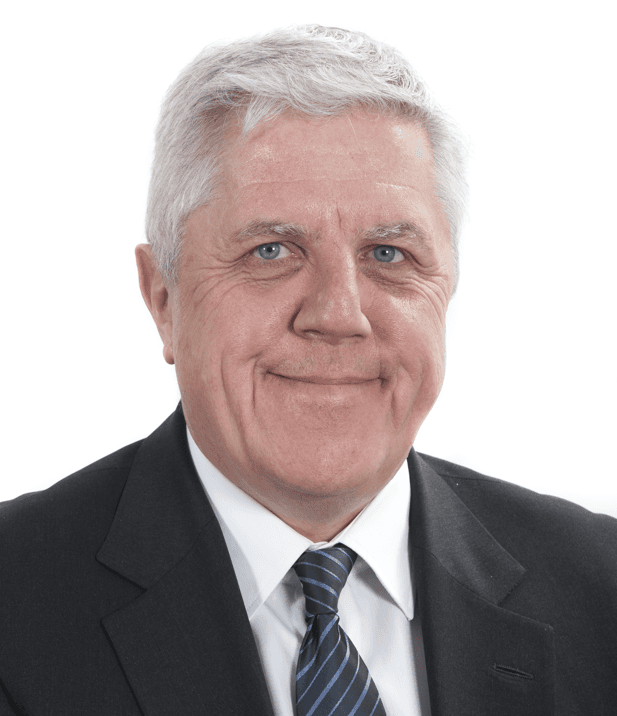
Edwin Moses, the former CEO of Ablynx who currently is Charmain at Achilles Therapeutics, Avantium, LabGenius and NanoSyrinx, shares his story.
In the examination room at the Kraftfahrt- Bundesamt that day, there was an unusual scene: two instructors – one in the passenger seat, the other observing from the back – watching a candidate whose performance suggested that obtaining a driving licence was at best an academic exercise. The examiner’s subsequent assessment was direct, if not entirely encouraging: “You’re absolutely hopeless. We’ll let you pass because you need the job. But you have to promise us that you won’t drive very much in the first few years.’’
This moment of pragmatic forgiveness would prove decisive. The candidate, a postdoctoral researcher looking for a job at an American biotech company, had faced a simple but fundamental obstacle: the job required a driving licence. After initially failing the test, he had obtained a letter from his university professor urging the authorities to grant an exception to the standard six-month waiting period for a retest. The bureau’s decision opened an unexpected door.
The road to success
This story highlights the role of luck and fate, and even more importantly the importance of others opening doors for – at that moment – younger, driven people. But who is the postdoctoral researcher in this story? Edwin Moses, currently Chairman of Achilles Therapeutics, Avantium, LabGenius and NanoSyrinx and former CEO of Ablynx.
‘’Looking back at some key moments in my career, I realize that they often happened when I was the last choice.’’
‘’As a postdoc in Germany, I wanted to stay in the country and find a job, but I wasn’t sure what I wanted to do’’, he continues. ‘’I knew I didn’t want to go into academia. Then I came across a job ad for an American biotech company that sold reagents for molecular biology research. It was run by an entrepreneur and operated like an informal network. The job required a PhD, but also fluency in German. My German wasn’t great, but I applied anyway. I went through the interview process, and in the end, the American team called me back. I was the only PhD who was open to it – so they hired me.’’
When Moses was hired, he was sent to the United States for three months of training in sales and molecular biology products. There was only one problem: he needed a driving licence. ‘’I didn’t have one, so I took an accelerated driving course in Germany. As you can imagine, Germany has very strict rules and I failed the test. Normally I would have had to wait six months before retaking the test, but my university professor wrote a letter to the authorities explaining that I needed the licence for my job. They agreed to give me another chance, but on one condition: they put two driving instructors in the car – one in the front seat, one in the back – to make me even more nervous. Somehow I managed to pass.’’
Creating a talent fostering culture
Culture is critical to success. It’s the shared values and behaviours that shape the employee experience and drive performance. A strong culture fosters belonging, engagement and innovation, attracting and retaining talent while improving teamwork and communication. It clarifies expectations, guides decisions and reinforces the company’s mission, laying the foundation for growth. According to Edwin Moses, however, success is not just about generating returns for investors and the development of medicines for patients.
How do you define success?
‘’My favourite achievement is the development of the people I have worked with. There are 13 former Ablynx employees who have become CEOs.
I believe we created an environment where people could learn, where they could be ambitious and think they could do it themselves. When we were bought by Sanofi, people came up to me and said they had just had the best 10 years of their lives. Work doesn’t stop at the office door, it’s a critical part of your life.’’
What is the biggest challenge you have seen in leadership?
‘’Convincing fellow leaders of the need to nurture the culture, because often they don’t believe in it. Very often you have C-suite members who see it as a waste of time. You have to convince them as well. Not just get them to do it, but be enthusiastic about being part of it. People would also tell me: ‘You don’t go home at 10 pm from the parties, other C-suite would leave early’. Your people are picking up on all these signals. That is the biggest challenge: to get the rest of the senior management team on board and committed to investing in the culture and people.’’
As a first-time CEO, you will make inevitable mistakes. What lessons do you have for firsttime CEOs?
‘’Very often the mistake is not changing key people or board members as quickly as you should. I think that is a very common mistake. It remains difficult, because letting people go – whether employees or board members – is never easy. But too often we underestimate the damage that can be done by having the wrong person in a critical role at a critical time. This is especially true when a business is evolving rapidly. Someone may be perfect for one stage of the company’s growth, but not for the next.
Looking back, it’s probably the area where I have made the biggest mistakes.’’ Success breeds success Belgium’s thriving biotech sector owes much of its success to the Flanders Institute for Biotechnology (VIB), a research organization that bridges the gap between scientific discovery and commercial viability. This highly structured institute has nurtured groundbreaking innovations, such as Ablynx’s Nanobody technology, providing crucial support during the precarious early stages. ‘’The key differentiator in Belgium is the VIB. It consists of a few thousand people. Take Ablynx’s Nanobody technology as an example. When it was first discovered, no one wanted to fund it, but the VIB kept it alive until investors came on board. In terms of intellectual capacity, they are on a par with Harvard and Yale. They also attract a significant number of international scientists to Belgium. I think they make a real difference, but they keep a relatively low profile.’’
While there may be some truth in the European paradox – the idea that Europe excels at research but struggles to translate it into commercial success – Belgium, and the Benelux region in particular, is a notable exception. ‘’I think that idea is true for Europe as a whole but if you look at the Benelux with companies like Argenx, Genmab and formerly Ablynx, then compared with other European areas the Benelux biotech scene is quite outstanding, creating multi-billions of Euros in value and new, innovative medicines to benefit patients.’’
If Ablynx had never existed, neither would Argenx, which has now grown into a $39 billion company. The three key people who started Argenx came from Ablynx. ‘’When they went to the United States to raise money, they could point to Ablynx and say: ‘Well, you know Ablynx from Ghent? We are from Ghent too’. When I first went to the USA on behalf of Ablynx, people asked me where Belgium was and if it was part of France? The American investors are not stupid people, of course, but they weren’t familiar with the country or the Flanders region. But then they started to see the success at Ablynx and so when the next people come from the region and tried to raise money, it became easier.‘’
What is it like to be stepping down after the sale of Ablynx to Sanofi for 3.9 billion euros?
‘’As a person, it is a huge shock to the system. You go from thinking 100 per cent about the company to not having to do it at all. The first few weeks were very strange. It took me a couple of months to get over that feeling. I was happy with the outcome and I think it was good for the people. I thought about doing other CEO jobs, but it was more appropriate to do non-executive jobs. So that was what I was looking for.’’
What is a book that you would recommend to the readers?
‘’Catch-22 by Joseph Heller. It’s a book about American forces getting themselves into absurd situations, at one point even bombing their own airfield. At the centre of the story is a complex protagonist who finds himself in impossible dilemmas. The novel revolves around the concept of the Catch-22, a paradoxical problem with no clear solution. This theme runs through the whole book. It’s a long story, full of irony. It’s incredibly funny, but it makes you think about problems that seem unsolvable – problems where the only way out is to do something completely irrational.’’
Do the situations in the book relate to your experience as a biotech entrepreneur?
‘’Yes, I think the book is about living with ambiguity which is also the essence of biotech. In biotech, there are always a hundred things happening at once – constantly changing and evolving. You have to be able to constantly adapt and understand that there’s never a perfect solution but that standing still is not an option.’’
Turning optimism into reality
The biotech world is filled with promising ideas, but what separates those who succeed from those who don’t? “It’s the entrepreneurial spirit: a blend of proactive planning, relentless execution, and the mental fortitude to persevere through setbacks.
I think that a real entrepreneur is someone who has a deep sense of optimism and who has the ability to turn that optimism into reality. It’s one thing to be hopeful, but you have to take action – you have to create a plan and follow it through and take people with you.
I know from my own experience that setbacks are inevitable. The journey is never smooth. You have to be able to rise, fall, and recover.’’
‘’For me, it’s about having the attitude that if something goes wrong, you go home, have a glass of wine and come back the next day ready to start again with a new idea’’, Edwin Moses emphasises. ‘’That kind of perseverance – something Onno van der Stolpe, formerly the CEO of Galapagos, demonstrated time and again – is, I believe, the defining characteristic of any great entrepreneur.’’
Rather than having formal mentors, Moses has learned by observation. He recounts how he used to work in Rome for Giovanni Cozzone, an Italian CEO known for his high energy and getting things done. ‘’Cozzone instilled a sense of urgency: if an idea was good, it had to be acted on immediately.
This lesson has stayed with me and shaped my approach to business. I encourage organisations to seize opportunities rather than overthink and delay action. Waiting too long can cause a great idea to lose momentum or relevance.’’
Biotech financing has evolved significantly, with Series A funding rounds of $100 million becoming more common. The IPO process has also changed. Previously, roadshows required CEOs to travel extensively, presenting to investors in different regions. ‘’Fundraising has also changed.
So if you do an IPO now, you can do at least part of it from your screen. In the days when I did an IPO, you would get on a plane and travel around and do a roadshow. It felt pretty tough, I have to admit, because you would do it in Europe and then you would go to the East Coast and the West Coast. It was physically exhausting.’’
‘’I’ve now spoken with CEOs who have done virtual roadshows, and they’re significantly more challenging’’, he continues. ‘’You go through ten back-to-back meetings, starting at 9 AM in Europe and continuing into the United States, late into the evening, with no breaks.
You don’t get that taxi ride between meetings to debrief with colleagues and reflect on how it went. Instead, you move directly from one meeting to the next, with no real transition. It’s a two-dimensional experience: flat and emotionally draining. I initially thought it would be easier since there was no travel involved, but in reality, it’s mentally far more demanding. I think people will increasingly revert to physical meetings again where possible.’’
A classic biotech story
Edwin Moses’ association with Avantium spans two decades. He was Chairman from 2001 to 2005, a period during which the company shifted its focus to pharmaceuticals. After a break, he returned to the chair five years ago. ‘’So when they needed a new Chairman, a key investor at the time, Sofinnova Partners who I’d known for years, approached me to see if I’d be interested to become involved again. And of course, I already knew Tom the CEO from those earlier days, so there was that connection as well. Why would they be interested in me? I think there are a lot of similarities between Avantium and a biotech company.’’
Although focused now on green chemistry rather than biotech, Avantium shares many characteristics. ‘’The key difference is in proving the technology. In biotech, you prove efficacy through clinical trials – you raise money to fund the trials and then prove that the drug works.
Investors in pharmaceuticals understand this model. In green chemistry, however, proof of concept means something different. You don’t run a clinical trial: you build a factory. You have to show that you can produce 5,000 tonnes a year at a viable cost, say $10 a kilo. Once you do that, chemical companies believe in the scalability of the process. If you can make 5,000 tonnes, then 100,000 tonnes is achievable, and this becomes a commercially viable way of making plastics or other materials. So while the proof of principle is different, the funding challenges, the need for entrepreneurship and the ability to sell a compelling vision are very similar.’’
Edwin Moses explains why he accepted a board position at NanoSyrinx, despite often turning down such opportunities. His decision was driven by two factors: his familiarity with the investors and his excitement about the science. The CEO of NanoSyrinx is a first-time CEO transitioning from academia, which presents particular opportunities and challenges. It is, to speak in his words, ‘a classic biotech story’. The company recently secured a £10 million funding round to advance its Nanosyringe technology, which enables precise drug delivery into cells.
‘’What’s exciting is that this system can be engineered for therapeutic use’’, Moses explains. ‘’You can load the container with a chosen drug or protein, modify the arms to specifically target liver cells, heart cells or other tissues, and then produce billions of these tiny delivery systems. It’s an elegant way of harnessing nature’s own mechanisms for targeted drug delivery into cells, which has enormous potential in therapeutics.’’



