
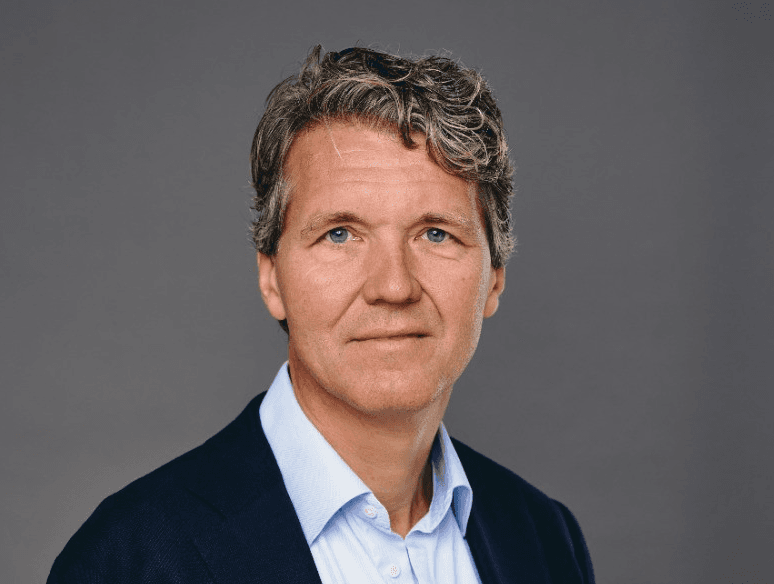
Willem van Weperen: ‘’There is always an expiration date for a CEO’’
René Kuijten on the early days of EQT Life Sciences: ‘We were the smallest player in the room – the dark horse’
René Kuijten on building EQT Life Sciences from the smallest player in the room into one of Europe's defining investors.

One Christmas evening in the early 1970s, the phone rang at the Kuijten family home in Utrecht. René Kuijten’s father took the phone and heard that a matching kidney had become available for one of his young patients that he had been treating for months. His father, a paediatric nephrologist and one of the first Dutch physicians to perform kidney transplants on children, left the dinner table to prepare a young patient for surgery. Dinner was abandoned in an instant. René Kuijten still remembers his mother’s quiet acceptance. However, he remembers his father’s joy far more vividly.
‘’He told my mother that he had to leave, and said how grateful he was to have found a good match. He was incredibly driven and focused on making an impact. It was that inspiration that led me to study medicine.’’
It is a short story, but it set the trajectory of a career that has run in parallel, if not identically, ever since. Today, René Kuijten is Partner at EQT and Head of EQT Life Sciences, one of Europe’s most significant life science investors. The Saturday and Sunday hospital rounds and dialysis summer camps, where the Kuijten family holidayed with hospitalised children and nursing staff, were not just a prelude to René’s clinical career. They formed the beginning of a kind of mission that he would later translate into capital allocation.
‘’What eventually disappointed me about hospital clinical practice was the focus on one-on-one care. By the later years of my medical studies, I realised I had a stronger desire to make a broader, large-scale impact.’’
The question behind the question
René Kuijten completed a PhD in oncology, conducting research at the University of Pennsylvania and defending his thesis in Amsterdam. While he was in the United States, McKinsey offered him a two-year fellowship: one year of MBA at INSEAD and one year working for the firm. His PhD supervisor encouraged him to accept the position, explaining that exposure to corporate operations would make him more effective as a doctor in a complex hospital system upon return. ‘’I enjoyed my time at McKinsey so much that I ended up staying for eight years. When I started at McKinsey, I noticed that many of the analysts and fellows I worked with jumped straight into solutions without properly diagnosing the problem first. Many of them were engineers and, when speaking with a client, they would immediately open Excel spreadsheets and start analysing data.’’
He frequently found himself having to step on the brakes. ‘’I questioned whether we had correctly identified the client’s underlying problem, and whether we were solving the real issue.
That was a key lesson from my training in hospital: you must listen very carefully to determine whether someone is presenting the actual problem. Because in medicine, patients will often tell you one story, but only reveal the real reason for their visit when they are standing at the door and ready to leave.
For example, a patient might visit a general practitioner and complain of a stomach ache. You discuss the pain, but as they are leaving, they might casually ask: ‘If someone has cancer, do they feel this type of ache?’. You suddenly realise that they aren’t just there for a stomach ache. There is a deeper fear at the back of their mind.’’
After his time at McKinsey, René joined Life Sciences Partners (LSP) – the predecessor of EQT Life Sciences – in 2001. He was the fifth investment professional and LSP was raising its second fund. ‘’The first fund started at around 25 million Dutch guilders. It grew slightly and was highly successful, prompting the founding team to raise a second fund and expand. The company was essentially a start-up back then. My colleague Martijn Kleijwegt was involved in the predecessor to LSP, which was a pan-European venture group called Euroventures formed in the 1980s. It was originally backed by companies such as Philips and Siemens, who wanted to encourage entrepreneurship in Europe. They evaluated their first life sciences deal and subsequently allocated a portion of their capital to the sector. Martijn executed those early deals, which included a couple of true European market leaders, such as Qiagen and Rhein Biotech. That specific life sciences fund was highly successful.’’
Riding the dark horse
However, Euroventures’ overall model was not successful at the time, and the group was dissolved. Martijn Kleijwegt then teamed up with some investors who recognised his track record to launch LSP. ‘’The anchor investor for LSP 1 was insurance group Achmea, via its venture arm Residex. Consequently, there was only one investor in the first LSP fund. When LSP was established, the landscape consisted of TVM Capital, Sofinnova Partners, Atlas Venture and HealthCap in Scandinavia, as well as Schroders in the UK. It was an incredibly tight-knit community, and we were one of the smallest players – the dark horse, so to speak.
Back then, start-ups were far less sophisticated. There were no serial entrepreneurs who already had built companies before. Because the funds were smaller and the management teams lacked experience, the risks we took were significantly higher, and fundraising was an ongoing challenge. It was a very challenging era.’’
In what specific ways? LSP 7 closed at around €1 billion, whereas the first LSP fund was only 25 million Dutch guilders.
‘’In those early days, we always co-invested in syndicates. However, due to the limited size of funds, a syndicate might include 25 different partners for a relatively small investment round, as many of them were individual angel investors. Looking across the boardroom table, you would see a large group of people contributing to a €5 million round. Ultimately, the model with a lot of angel investors didn’t work. By contrast, many of those early biotech investors only backed one or two companies, so if those failed, they lost everything. By the mid-2000s, there was a significant exodus of angel investors, which fundamentally changed how syndicates were formed.’’
Does navigating these complex fund dynamics provide a better understanding of the challenges faced by biotech entrepreneurs when building a company?
‘’Yes, it does. It is also interesting to note how the archetype of the biotech entrepreneur has changed over the years.
Originally, companies were almost exclusively founded by academic scientists. While they were brilliant, we always had to recruit a business counterpart to work with them. Nowadays, the most successful entrepreneurs are those who have a strong scientific background but also understand business.
Hiring a CEO with only an economics degree simply does not work in biotech. Thirty years ago, this hybrid profile didn’t exist. Now, we have individuals who complete a PhD or postdoctoral training, gain an in-depth understanding of the science, transition into a business development role within a large pharmaceutical company, and later become CEOs of start-ups.’’
Dementia as the new oncology
EQT Life Sciences’ LSP Dementia Fund began with a conversation that, at the time, was half a joke. Professor Philip Scheltens, one of the world’s leading experts on dementia, was visiting EQT’s Amsterdam office in his capacity as principal investigator for one of the firm’s portfolio companies. He remarked on how rapidly the field of dementia research was expanding. ‘’Half-jokingly, I said: ‘We should raise a dedicated fund together’. He left, but the very next day he emailed me to ask if I was serious. This prompted us to conduct a thorough analysis of the sector. There have historically been very few approved drugs for dementia.’’
Dementia today is where oncology was 20 or 30 years ago, according to René Kuijten.
‘’Decades ago, oncologists only treated patients who were already terminally ill, which made successful intervention very challenging. Furthermore, the medical community used to treat breast cancer as a single, uniform disease. The same misconceptions are evident in dementia today. People tend to treat dementia as one condition, ignoring the distinct pathophysiologies of Alzheimer’s disease, vascular dementia and other subtypes that we have yet to characterise. Additionally, clinical intervention currently only occurs after severe cognitive symptoms have manifested, by which time the neurological damage is already too advanced. To make a real difference, we must intervene much earlier and utilise robust biomarkers to detect the very earliest signs of disease.
The approach mirrors that used in oncology: catch it early, stratify the patients, and treat it aggressively at the onset.’’
The LSP Dementia Fund’s initial target was €100 million, the minimum that René considered viable. However, the more interesting number is the syndicate multiplier. ‘’When Philip and I examined these structural shifts, we decided to try to raise a dedicated fund. I told him that we would need at least €100 million to make it viable, but we ultimately raised €273 million. Most generalist life science investors were reluctant to invest in dementia research because they lacked the specialised expertise to assess the clinical risks, and historically, we did too. However, now that we have a dedicated fund backed by a world-class team of specialists, generalist funds are eager to co-invest with us. For every euro we invest, our syndicates bring in an additional five to six euros. This enables us to leverage anywhere from €1.5 billion to €2 billion of total capital into the dementia ecosystem.’’
One of LSP Dementia Fund’s first investments was in NewAmsterdam Pharma. The company was initially founded with a focus on cardiovascular disease, but its lead molecule has demonstrated unexpected therapeutic potential in the treatment of dementia. ‘’Although their financing syndicate was already full, they made room for us specifically because they wanted Philip Scheltens on board to guide this secondary neurology programme. Despite not yet having commercial revenues, the company is currently public and valued at around $4 billion. This secondary dementia programme has gained immense credibility thanks to Philip’s involvement. It highlights the compelling physiological fact that the brain relies heavily on a complex vascular network. The same mechanisms that damage blood vessels in the heart, such as cholesterol buildup, also impair blood vessels in the brain. Therefore, cardiovascular therapies can have a profound impact on the treatment of conditions such as vascular dementia.’’
Dismantling impulse financing
René Kuijten, co-founder of the Oncode Institute and Oncode Accelerator, has firm views on how Dutch valorisation must change.
‘’The root of the problem is that our academic scientists do not receive sufficient professional support during the initial, fragile phase of conceptualising a spin-out.
Top-tier universities internationally maintain robust, highly professionalised technology transfer operations. These offices have a large staff of high quality business developers and dedicated budgets for seed capital, pre-seed funding, proof-of-concept studies and patent financing. In the Netherlands, however, we lack this infrastructure. A prime example of this is the VIB (Flanders Institute for Biotechnology) in Belgium, which was founded 30 years ago. Over three decades, the VIB has become an extraordinary success.’’
By contrast, Dutch universities operate on what he calls ‘impulse financing’: short-term government programmes that reset every four years. ‘’Over the years, we have cycled through initiatives such as BioPartner, TechnoPartner and the National Genomics Initiative. These initiatives provided temporary capital for a short period, focusing almost exclusively on funding the resulting start-up, rather than investing structurally in professional talent within the university. In order to mature a technology until it achieves the critical mass required to spin out successfully as a venture-backed Series A company, you need high-quality, permanent professionals and early-stage capital inside the university.’’
Furthermore, the Dutch government tends to spread its innovation budget far too thin across a fragmented web of tiny grants, innovation credits, and SME incentives. ‘’We end up creating a vast number of microscopic companies that will never scale.
There is a flawed assumption that if a PhD student files a patent, you can just hand them a €100,000 government grant and a company is born. That approach does not build sustainable corporate champions.
A brilliant academic scientist typically has no understanding of international patent strategies, licensing options, corporate governance, or the optimal timing for a spin-out. That is the exact role of a professional valorisation team: to act as a co-creator alongside the scientist.’’
René Kuijten used the VIB’s structural blueprint to help establish the Oncode Institute. Prior to joining LSP in 2012, Rudy Dekeyser, Head of the Health Economic Funds at EQT Life Sciences, worked as a Managing Director at VIB. Drawing on his experience at VIB, Dekeyser helped to develop the model. Now in its seventh year, the Oncode Institute ranks as the number three biomedical research institution globally and has produced twelve spin-offs. ‘’Yet despite its proven track record, the Oncode Institute still relies on temporary funding. It is currently kept afloat by sporadic funding from the government and the Dutch Cancer Society (KWF). We are lobbying the government to transition to a model of permanent, structural financing. If the staff at a world-class institute don’t know whether their funding will be available in two years’ time, then the top talent simply leaves.’’
Risks you can control
René Kuijten has gained a fundamental understanding of how to identify and differentiate between different types of risk.
‘’When evaluating a company, we conduct thorough scientific due diligence. If the underlying biological hypothesis ultimately fails in late-stage clinical trials despite promising preclinical results, then this would be an inherent risk of drug development that we would accept; the biology is beyond our control. However, we can control team risk, structural risk and financial risk. Managing these risks is our explicit responsibility.’’
He illustrates this distinction through ONWARD Medical, which was originally backed by LSP 5 and develops precise electrical stimulation of spinal cord lesions to allow paralysed patients to regain movement. ‘’It is an incredible technology that has now successfully entered the market: paralysed patients are walking again. Because we had such strong belief in the technology, the management team and the sheer size of the market opportunity, the company needed substantial funding to grow. Instead of hesitating, we doubled down by leading a €40 million funding round through our latest fund, LSP 7. We knew that the financial structure was something we could fix, and that we had the capacity to do so.
In the early days of your investment career, you tend to rely heavily on the opinion of your syndicate members and rarely have the courage to commit to a high-stakes deal on your own. With the institutional experience we have today, you learn to trust your clinical and operational instincts.’’
This institutional experience will now be applied on a larger scale, as EQT has been selected to lead the €5 billion Scaleup Europe Fund. This initiative is backed by the European Commission and aims to close Europe’s scale-up funding gap. Life sciences are among its core sectors. For an investor who has spent his career arguing that European science deserves the capital and patience necessary to create global biotech champions, this is a fitting end to the story. ‘
’With this fund, EQT Life Sciences can now write tickets between EUR 5 and 300 million for a single biotech company, effectively ensuring that we are the investor of choice for companies at every stage of their journey’’, René emphasises.
While the Scaleup Europe Fund is a bet on the future of European biotech, Tubulis is proof of its current capabilities. Gilead recently acquired the German company, which is one of LSP’s portfolio holdings, for $3 billion upfront, with the total potentially reaching $5 billion. ‘’This is the largest exit in European private biotech history, as well as the largest cash return for LSP ever. Tubulis was acquired much earlier than anticipated. The company only had early Phase 1/2 clinical readouts, which is an uncommon inflection point for a major pharmaceutical acquisition historically. However, their unique positioning in the ADC landscape and their deep domain expertise were so impressive that a major buyer was willing to pay a premium to acquire the platform early.’’
About René Kuijten
René Kuijten is Head of EQT Life Sciences and Partner at EQT since 2022. René was Managing Partner at LSP from 2001 until 2022, when LSP joined forces with EQT and was renamed EQT Life Sciences. René is currently also among others Vice Chairman of the Supervisory Board of Oncode Institute which he co-founded, and he advises the Dutch government on life sciences policies through HealthHolland.
Prior to joining LSP, René was a senior consultant at McKinsey & Company for eight years, and co-leader of their European Healthcare Practice. He also served on the board of the Dutch Private Equity and Venture Capital Association (NVP) for 12 years.
He obtained his MD from Utrecht University, his PhD from the University of Amsterdam for research performed as a WHO Fellow at the University of Pennsylvania, and his MBA from INSEAD in Fontainebleau.
This article is part of a partnership between BiotechNews and BioPitch. See here for the original article on BioPitch.

