
Career
From Challenging the System to Changing It: Hanneke Takkenberg on Women’s Health and Leadership
As Chief Scientific Officer of Confo Therapeutics, Christel Menet has helped build one of Belgium’s most innovative biotech companies. Her career journey spans organic chemistry, drug discovery, and biotech leadership, driven by a passion for science and bringing better medicines to patients. In this edition of BiotechNews- TOPX Leading Ladies in Life Sciences, Menet reflects on the key moments that shaped her career, the challenges of building Confo Therapeutics from the ground up, and the leadership lessons she learned along the way. She also shares her perspective on women in leadership, overcoming imposter syndrome, and why trust, persistence, and speaking up are essential for success.
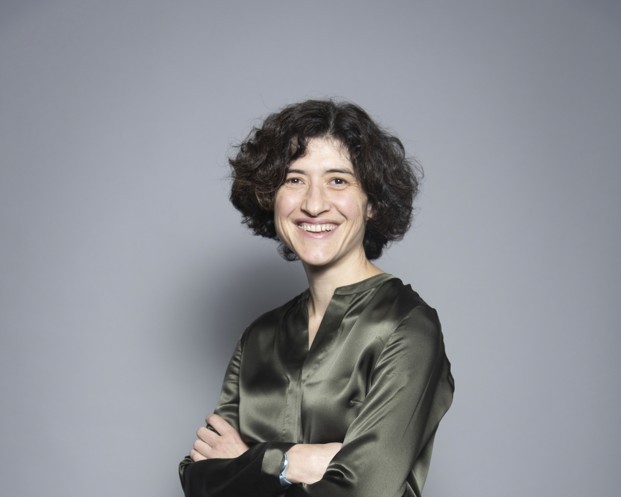
An interview by Karen De Ceunynck for TOPX Network & BiotechNews
To start, could you tell us a bit about yourself beyond your role as CSO of Confo Therapeutics? How do you like to unwind outside of work?
I like to stay active by going for a run or taking spinning classes at the gym. Around this time of the year, I enjoy spending my weekends on the French coast near Calais, where I practice Wing Foiling. It is a sport where you hold a wing in your hands and surf above the water. It is a challenging sport which requires a lot of training and persistence. But once you get going and start gliding above the water, it feels like you are flying which is really rewarding and calming and allows me to clear my mind. When I am not outdoors, I like to read a lot of books on topics going from philosophy and politics to gripping crime novels that allow me to fully immerse myself in the story. With the ease of digital books, I often find myself getting absorbed in a story for hours, on quiet mornings or before bed, making it an ideal way to step away from work and science.
Could you briefly walk us through your career path leading up to Confo Therapeutics?
I am a chemist by training and started my career with a PhD in organic chemistry from the University of Manchester in the UK. Following my PhD, I stayed in the UK and joined a CRO, Evotec, where I spent my time in synthetic chemistry developing products for pharmaceutical companies. At that time, in the early 2000s, there was a belief that building large compound libraries and screening them was sufficient to find new small molecules for each target. But after a few years, I began to feel that this limited chemical diversity where you screen a library of 300 compounds built around the same scaffold didn’t allow you to expand into any new chemical space. That’s when I started thinking more about the purpose behind the chemistry and why pharmaceutical companies were interested in finding new small molecules. This made me aware of the biotech and pharma side of chemistry, which I had no exposure to during my PhD where I was focused on pure organic chemistry, passionate about developing new reactions and understanding how they work. So, I decided to check out the world of biotech and pharma.
This led me to move to a biotech company in France, Faust pharmaceuticals (later Domain therapeutics and now Kainova Tx), where I began to understand how chemistry is applied in drug discovery and what properties a molecule needs to become an effective medicine for patients. I found it extremely interesting, but culturally even though I am French it wasn’t a fit for me, so I started looking elsewhere. During conversations with a friend, the biotech company Galapagos in Belgium came up. She told me they were setting up their chemistry group and that I should apply. So, I sent my resume and ended up getting the job. I moved to Brussels where I could speak French, while working in Flanders.
This was a pivotal moment that really started my career. At Galapagos, I had the opportunity to grow within a highly dynamic biotech environment, learning the full drug discovery process from target identification to clinical development. I was also fortunate to work on a successful program, filgotinib, which was a major milestone and allowed me to take on increasing responsibility, eventually leading the medicinal chemistry efforts.
As the company grew, the environment began to change, and I realized I was most motivated by science-driven decision-making and keeping the patients in mind.
Around that time, I was approached by a recruiter about joining a newly founded company, Confo Therapeutics, as one of the first team members and to build the drug discovery organization from the ground up.
It was a big leap out of my comfort zone, having worked in medicinal chemistry with a team I knew, and going into something completely new. But it was also an exciting opportunity to apply everything I had learned and shape something from the beginning. So, I decided to take on the challenge. There were of course moments of doubt where everything felt difficult and unstable, and I questioned whether I had made the right decision. In those moments, it was essential to stay optimistic and keep believing that there was a path forward.
Looking back, it’s been an incredibly rewarding journey. Building the team, developing the platform, and seeing it all come together has been a defining experience in my career.
What made the experience so special for me was the team. Every morning, I genuinely enjoy coming to work because I am surrounded by people who are deeply motivated and excited by the science. It reminds me of the early days at Galapagos, when everyone was driven by discovery and energized by every new piece of data. Even recently, when we obtained some really strong results after working incredibly hard, the excitement across the team was contagious. People were sending emails, bringing cakes to celebrate, and sharing in the success together.
That atmosphere, where people are passionate, collaborative, and truly excited about scientific progress, is exactly how I believe science should be done.
What have been the biggest challenges at Confo Therapeutics?
One of the biggest challenges I faced when joining Confo Therapeutics was building the drug discovery side. Confo had a small team largely coming from academia, brilliant scientists who were happy doing science, but not yet thinking in terms of bringing a drug to market. One of my first tasks was to help shift that perspective: moving from doing great science to focusing on how we translate that science into something that can ultimately benefit patients. Early on, I also had to challenge some of the initial strategic choices.
The team had selected very novel, unvalidated targets alongside a new technology platform, which made the overall risk extremely high. I changed strategy and choose targets that had already been explored but where existing approaches had failed, and then used the platform to make a difference. Finding the right targets was critical, not only scientifically but also to attract investors.
The next major challenge was making the platform work with the target(s), turning it from an exciting concept into something robust, fast, and efficient enough to drive drug discovery in a meaningful way. That required a lot of iteration, learning, and persistence.
Building the right team also came with its challenges. I feel very fortunate because throughout this journey, I’ve worked with a leadership team that I genuinely enjoy collaborating with. At the same time, as the company expanded quickly, there were moments when we recruited people who were not the right fit for the organization.
In a small biotech environment, even one toxic person can have a big impact on the atmosphere and momentum of the company. Learning how to identify the right people, maintain a healthy culture, and build a cohesive team became an important part of the journey.
Today I feel we have built a team where everyone truly belongs and contributes positively. Creating that kind of environment has been just as important as scientific progress itself.
Now let’s switch gears and focus on you. What are you most proud of? What do you consider your biggest achievement so far?
I am most proud of what I have built at Confo Tx. Some people would probably point to filgotinib (Galapagos) as my biggest achievement, taking a molecule from target identification all the way to market in Europe. And of course, I am proud of that journey but for me, Confo Tx represents something even deeper, because it demanded everything from me. When you join a small biotech, it becomes your entire life. You go home thinking about it, you wake up thinking about it, and even your dreams are about solving the next scientific challenge.
Over the past ten years, we have gone through a lot of challenges into building the company, the platform, and the pipeline. Today, seeing where we are, with a strong pipeline, a platform that works, and molecules advancing into Phase II in partnership with a major pharmaceutical company, is incredibly rewarding. When a big pharma company decides to partner with you, it validates years of hard work. For me, that recognition means a lot because it confirms that what we built has real scientific and medical value.
Was there a failure or setback that taught you an important lesson?
Throughout my career, I learned that every day brings lessons. One of the most important lessons came from experiencing environments where there was too much internal politics and tension between teams. That made me realize very clearly that I wanted to an environment where people are motivated first by the science and by the goal of bringing better drugs to patients, not only by promotions, titles, or career ambitions. Of course, personal growth and recognition are important, and people need opportunities to develop and feel valued. But I believe the strongest teams are driven by curiosity, collaboration, and a shared scientific purpose. That balance is not always easy to maintain. As a leader, you need to ensure people continue growing and reaching their personal goals while also preserving a culture where science remains at the center. At Confo, I truly feel we have built an atmosphere where collaboration and trust drive scientific innovation.
Have you faced any challenges as a female CSO in often male-dominated environments?
I honestly never felt defined by being the only woman in the room. When I walk into a meeting full of men, I do not automatically think about my gender or feel uncomfortable because of it.
In my mind, I have always seen men and women as equal, so I never approached leadership situations thinking, “I am the woman in the room.” That mindset helped me a lot throughout my career.
That being said, I do notice subtle things that reveal how deeply certain stereotypes are still rooted in society. Sometimes during meetings, someone will use an example involving a man and a woman without even realizing the bias behind it. For instance, they might say, “Kevin can approve a budget of $10,000, while Christel can approve $5,000.” Small examples like that immediately stand out to me.
I always wonder why the man is unconsciously associated with the larger responsibility. I do not feel personally limited by those moments, but I notice them. They remind me that many cultural assumptions are still deeply anchored.
Even in professional meetings, especially in male-dominated settings, you sometimes sense that people unconsciously expect women to take on a more supportive role. For example, during certain international meetings, I sometimes had the feeling that people naturally addressed the CEO, who is male, while looking at me as if I might be there to take notes rather than contribute strategically. It is a subtle feeling rather than something explicit, but you notice it occasionally.
At the same time, I have been fortunate that within my own executive environment, I never felt treated differently because I was a woman. In the executive committee, where I was often the only woman, my colleagues always treated me as a complete equal. I never felt excluded or diminished because of my gender, and that made a big difference. I also think culture and geography play a role. In Flanders, I personally never felt a strong divide between men and women professionally. I suspect that in other countries, perhaps including France, the difference can feel more pronounced. My experience in Belgium has generally been one where equality felt more natural and integrated into the professional culture.
Most importantly, being a woman never stopped me from progressing in my career. I never allowed gender to become a limitation in my own mind. That is also why I always encourage young women and girls to believe that they can achieve leadership positions in science and business. Even if subtle biases still exist, they should never define what you can accomplish.
What skills, beyond technical expertise, have been most important in your leadership journey?
One of the most important skills in my leadership journey has been learning not to be afraid to speak up. If you never express your ideas in meetings, people will not notice your contribution.
Of course, it is important to choose the right moments and not speak just for the sake of speaking, but when something matters, you need to have the confidence to say what you think. I also learned the importance of being assertive when presenting data and scientific ideas. If you appear uncertain or hesitant, it becomes difficult to convince others. People need to feel that you believe in what you are presenting.
At the same time, it is equally important to listen as a leader. If you do not listen to your team, people stop feeling heard and collaboration becomes difficult.
Another key lesson for me was that strong teams are built on trust. When working with people, you naturally evaluate their strengths and abilities at first, but once that trust is established, you need to give them ownership and avoid constantly looking over their shoulders. Without trust, healthy working relationships cannot develop. Creating an environment where people feel respected, trusted, and motivated has always been very important to me.
Any advice for women early in their career, after master’s or PhD?
For women early in their careers, one piece of advice I would give is to trust that if you are given a leadership role, it is because people believe you are capable of doing it.
Many women immediately doubt themselves and wonder whether they are good enough, while men often accept new positions with far fewer doubts. I experienced that myself when I became CSO. I struggled a lot with imposter syndrome and often questioned why I had been chosen for the role. Over time, I realized that women often underestimate themselves because society teaches them to doubt their abilities more than men do. That is why I always encourage young women to believe in their competence and not assume they were chosen by mistake.