
Startup
Armed Cell Therapeutics Raises More Than €50 Million to Advance Next-Generation CAR-T Therapies
1 min read
Respiratory virus infections kill hundreds of thousands of people every year, with COVID-19 and influenza among the leading causes. Projections on the virus surface, such as the coronavirus spike protein, enable these pathogens to enter our cells and cause infection. Blocking this process with biotherapeutics is a promising approach to prevent infection and thereby disease.
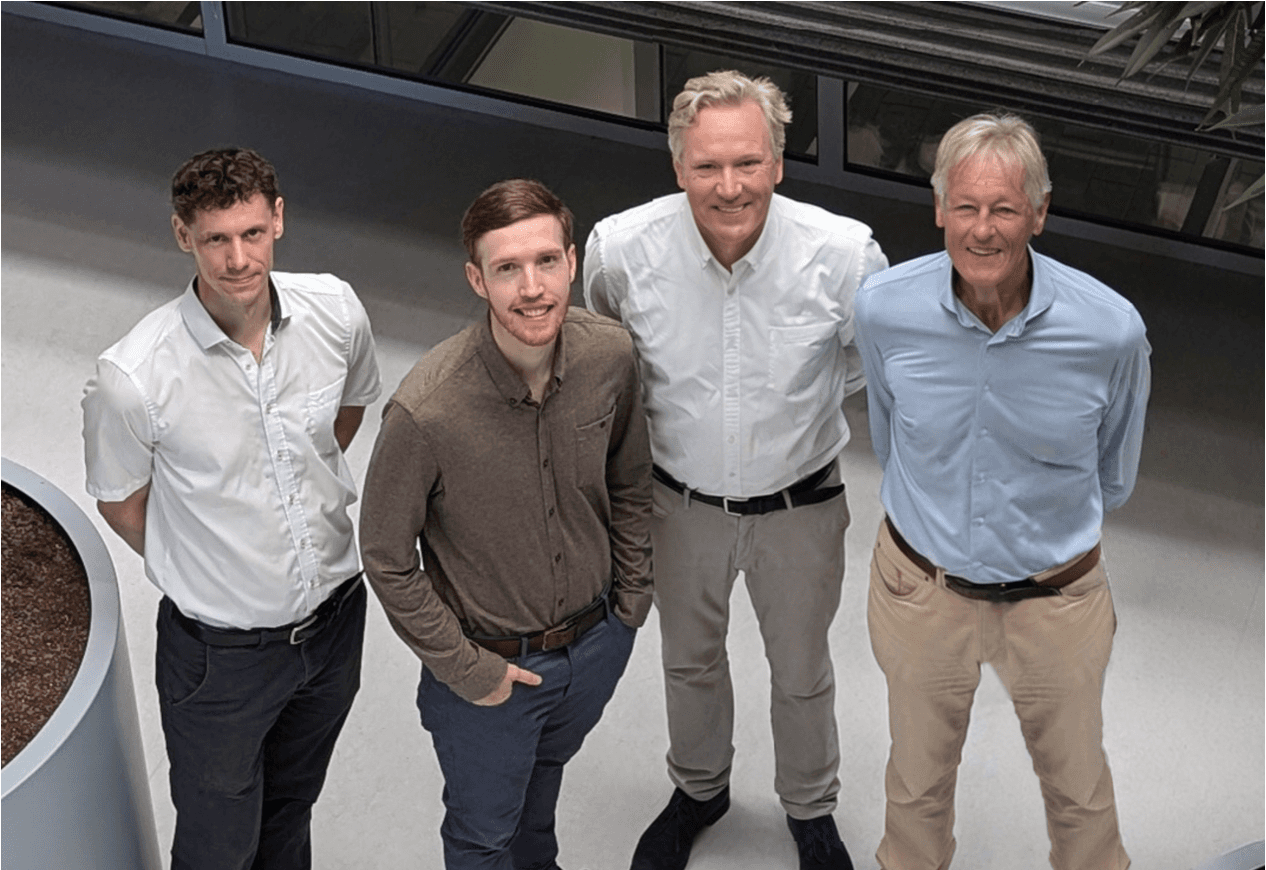
Fltr: Seino Jongkees, Daniel Hurdiss, Pieter Jan Vos and Peter Rottier Photo by:
VirXcel, a biotech startup based in Amsterdam, is developing novel antivirals against respiratory viruses using macrocyclic peptides. These peptides offer exceptional stability and specificity, positioning VirXcel’s pioneering approach at the forefront of antiviral innovation.
The company is developing a nasal spray as its primary mode of delivery, targeting respiratory infections at their point of entry. The macrocyclic peptides serve as both pre- and post-exposure prophylaxis by binding conserved sites on viral surface proteins that are difficult to reach with traditional biotherapeutics, such as antibodies. This strategy enables rapid, localized action and offers a user-friendly alternative to systemic therapies.
VirXcel’s lead candidate, VXL-001, targets the SARS-CoV-2 spike protein and is currently undergoing pharmacokinetic studies, following promising data from in vitro virus infection models. These ongoing studies aim to validate the peptide’s safety, bioavailability, and efficacy in vivo, supporting the company’s vision of developing affordable, fast-acting, broad-spectrum antivirals.
The VirXcel team combines deep academic expertise with entrepreneurial drive, underpinned by strong backgrounds in peptide chemistry, respiratory virology, and drug delivery systems. The company maintains close ties with Utrecht University (UU) and Vrije Universiteit Amsterdam (VU).
Founded in 2024 as a UU spin-off, VirXcel secured pre-seed funding from Innovatiefonds Noord-Holland to advance preclinical proof-of-concept studies for VXL-001. The company is currently raising additional seed funding and welcomes discussions with life science investors.



