
Startup
Armed Cell Therapeutics Raises More Than €50 Million to Advance Next-Generation CAR-T Therapies
For almost a century, heparin has been a trusted protector against blood clots in hospitals and dialysis centres around the world. However, this life-saving drug is not without its issues. Its production relies on the intestinal mucosa of pigs, creating a highly vulnerable supply chain. When African swine fever swept through China's pig farms, hospitals worldwide began to feel the effect of the heparin shortages. The paradox became impossible to ignore: one of our most essential drugs was still tied to a twentieth-century extraction process and was therefore vulnerable to any disease that could affect pigs.
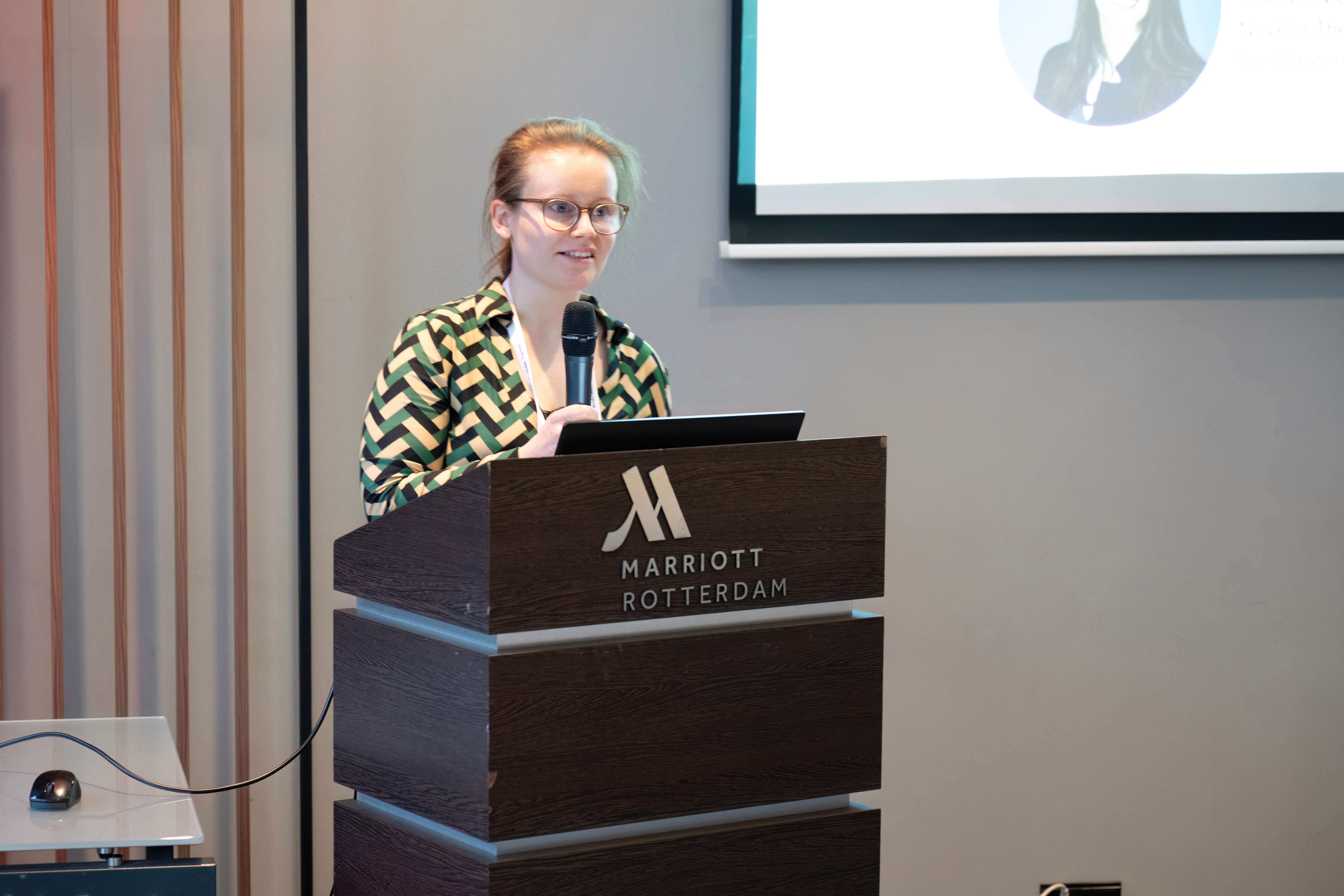
Aisling Foley Photo by:
Instead of accepting the traditional extraction approach, Aisling Foley, together with her co-founder Ilaria Poledri and the ExCulture team have progressed a microbial fermentation platform that uses mixed bacterial cultures that originates from the group of Mark van Loosdrecht and Yuemei Lin at TU Delft, to produce sulfated glycosaminoglycans, the macro-class that anticoagulant heparin comes from.
Roots in rural Ireland
Aisling grew up on a small farm in south-eastern Ireland, where she learned early on about the intersection of agriculture and science which also sparked her interest in biology and sustainability. ‘’I grew up on a small farm in the southeast of Ireland. My parents work outside of the farm too, but it's something my dad has always worked on in his spare time. We mainly have cattle for beef, but we also have a vegetable garden for the house, and I think that's where my interest in science started. I loved growing vegetables and flowers and helping my dad and sister look after the animals.’’
She isn’t the first person in her family to start her own company. She says it could be that it's in her blood to be an entrepreneur. ‘’My dad came across an archive of interviews from the Irish national radio service, one of which was with my grandfather in 1966. He was a carpenter and wheelwright, and in the interview, my grandfather talked a bit about working for himself, how when you must build things up bit by bit from the foundation it’s difficult, you don’t have any spare time when you’re your own boss.’’ Her uncle on her mother’s side founded his own company in the computer programming space in the 1990s and even further back one of her maternal granduncles opened a motor garage and filling station in the 1930s.
A personal motivation
Her original ambition was to work in biomedical sciences, driven by a desire to combat the illnesses that had affected her loved ones. ‘’There’s a history of various diseases and conditions in my family, including the autoimmune disease lupus. Unfortunately, two of my aunts had that. Another aunt had cancer, which she overcame. However, she later died from sepsis. That's what initially sparked my interest in setting up ExCulture. Like many people who want to study science, I went to university thinking I would focus on oncology. But it turns out that I'm not a natural organic chemist. I just can't intuitively follow those reactions. The Environmental and Sustainable Chemistry specialisation was relatively new in Dublin at the time, and I found that very compelling.’’
Driven by a desire for international experience, she pursued a semester-long international exchange at the University of Virginia. ‘’The chemistry studies were extremely tough. I really enjoyed it and found the environment very motivating, but they use a bell curve grading system, which made me feel under a lot of pressure to work really hard. I did a couple of projects there, but the main one was working in an organometallic chemistry group. We were developing ligands for palladium catalysts.’’
Upon her return, despite her growing certainty that her future lay outside the pharmaceutical industry, she adopted a 'try before you decide' approach. She took an internship at Merck & Sharpe and Dohme. ‘’Even though I was quite confident at the time that I didn't want to be in the pharmaceutical industry in the future I always think: don't make a decision without trying something first. The most interesting thing for me was learning how to scale up a lab reaction for manufacturing, as well as learning just how many different people from engineers to finance and quality personnel must give their input before the process could move to the manufacturing site.’’
The heparin crisis
TU Delft's technology transfer office (Delft Enterprises) was seeking a founder to commercialise a patent-pending bioprocess that had emerged from decades of wastewater treatment research. This technology uses mixed cultures of microorganisms to naturally produce sulfated biopolymers that are remarkably similar to heparin. ‘’I had also learned about the licensing and ventures group while I was in Virginia. I think I was kind of disillusioned at times during my studies, because while a lot of the innovations happening at the university are super cool and innovative, they don't necessarily make it into the real world. I was connected via Female Ventures with someone working at Delft Enterprises. I started following them on LinkedIn and saw that they were looking for a founder to spin out a company based on a patent-pending bioprocess for environmental wastewater treatment.’’
This project had been originally worked on by Winnifred Noorlander, who, after coming across the patent application of Professor’s Mark van Loosdrecht and Yuemei Lin et al, had developed a proof of concept for an antiseptic. Unfortunately, Noorlander had to stop working on the project due to a severe injury, but she is an on-going and inspirational supporter of Aisling and Ilaria, founders of ExCulture. ‘’From our experience of doing a marketing project together during our business studies courses we knew we could work well together, and I felt that Ilaria’s molecular genetics and biotechnology background was relevant to the microbial bioprocess and complementary to my chemistry background so I approached her one month after starting the project myself and asked if she would be my co-founder. She said yes on the spot and we’ve been working together for over three years now.’’
‘’Our aim is to produce a safer heparin via a more sustainable production method, and although we still have quite a lot of work ahead of us, we’re optimistic that we can achieve this,’’ she continues. ‘’Ideally, we would like to have onsite or onshore production to ensure regional sovereignty of supply. If we think back to the pandemic time, that was a major challenge from a medicine perspective. We feel that setting up a bioreactor in the Netherlands, Ireland or the USA, for example, should not be a problem, and that this would be more localised to the major markets.’’
Lessons from a pioneer
As a Termeer Fellow, Aisling draws inspiration from the legendary founder of Genzyme – who transformed the treatment of rare diseases – the late Henri Termeer. ‘’When you hear about someone like Henri Termeer, it's mainly about Genzyme, the multi-billion-dollar company. But when you read this book (Conscience and Courage: How Visionary CEO Henri Termeer Built a Biotech Giant and Pioneered the Rare Disease Industry), you get a true insight into the journey they and Henri Termeer followed from the early days.’’
What does the Termeer Fellowship mean to you?
‘’Everyone involved in the Henri Termeer programme has a personal story or anecdote about how he helped, inspired or mentored them. The people who formed and support the Termeer Institute really have this pay-it-forward mentality and are always willing to help. There's just this ethos of helping each other. It's not about knocking people down. When you think about business, you sometimes think that everybody's in competition with each other, but they're really not. I can't speak for any other industry, but I really like this aspect of the biotech industry. We’re very lucky to have such a collaborative, supportive ecosystem in the Netherlands.’’



